Belgium
Belgium
Belgium at a glance
Small in size, rich in detail. Expect medieval towns, comic-book culture, chocolate, fries, beer, and quick train rides between cities.
- Best base: Brussels.
- Arrival: Charleroi (CRL) / Brussels (BRU).
- Top experience: Leuven (Oude Markt).
- Best for a weekend: Leuven and Brussels.
- Best for 4–6 days: Brussels, Leuven, and Bruges/Ghent.

Guide to Belgium
Belgium is a relatively small country in Western Europe, but it feels more diverse than many first-time visitors expect. In the north lies Dutch-speaking Flanders, in the south French-speaking Wallonia, and in the east a small German-speaking community. That is why bilingual signs — especially in French and Dutch — are a completely normal part of daily life.
Belgium also has no problem leaning into what it does best. The country likes to point out that it has more than a thousand breweries, and beer here is not just a drink but part of the national identity. Belgian brewers were among the first to truly refine the craft, which helps explain why it still carries so much cultural weight. One of the best-known spots is Delirium Café in Brussels, once listed in Guinness World Records for offering more than 2,000 different beers. Belgian chocolate can easily hold its own against Swiss chocolate, the desserts are rich in the best possible way, and then there are the legendary Belgian frites.
If you are drawn to history, Belgium gives you plenty to work with. One of the best-known places is Waterloo, the site of the 1815 battle that left a lasting mark on the shape of modern Europe.
Guide to Belgium
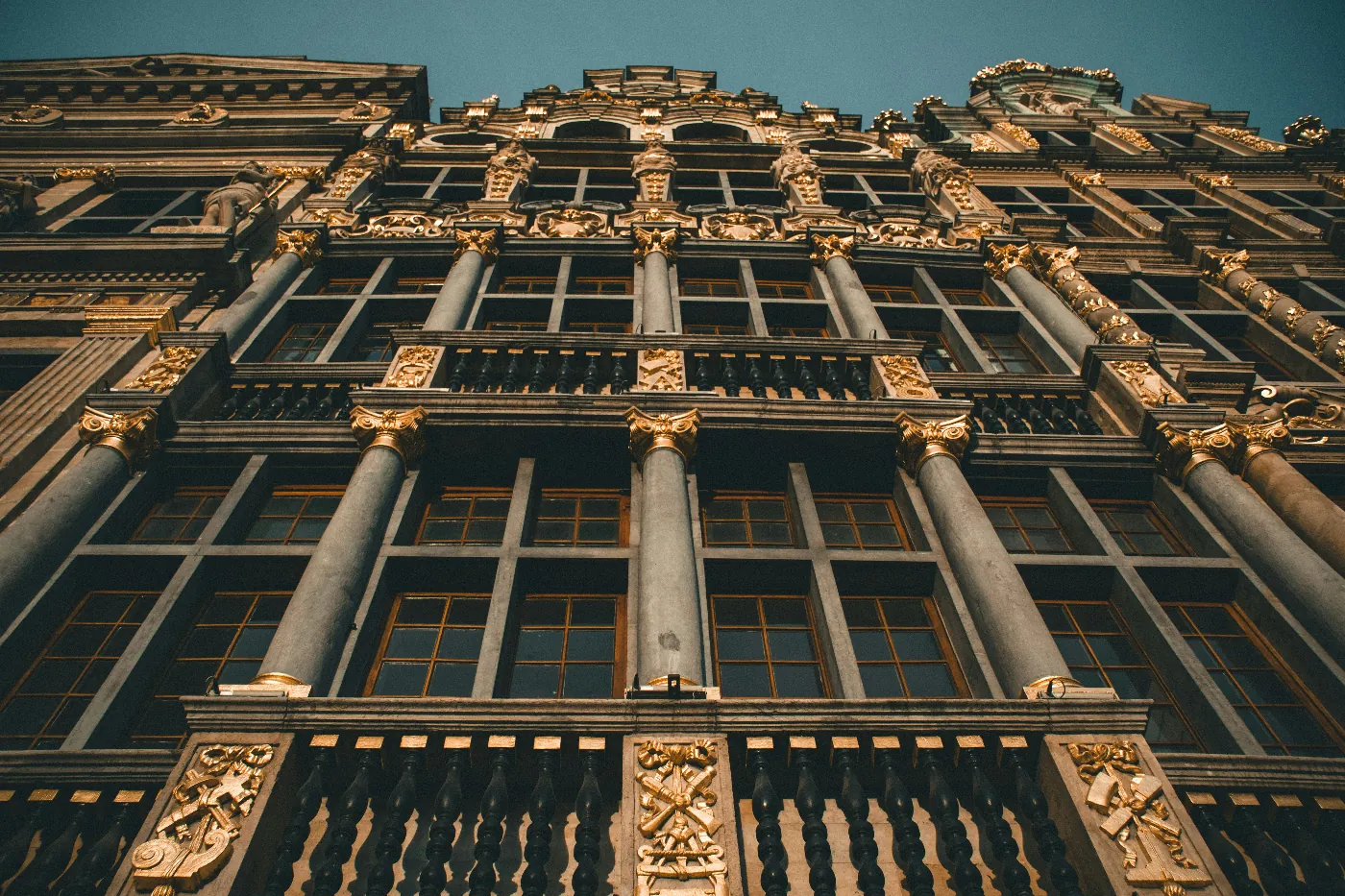
Brussels
Brussels is almost ideal as a first introduction to Belgium because it brings together several sides of the country in one place: the grandeur of Grand-Place, a UNESCO World Heritage Site, the polished elegance of the Galeries Royales Saint-Hubert, the city’s comic-book identity through the famous Comic Strip Trail, and the European Quarter, where you can visit the Parlamentarium or even the hemicycle of the European Parliament.
- Grand-Place for a first impression of the historic city center.
- Manneken Pis for a short stop at Brussels’ best-known icon.
- Galeries Royales Saint-Hubert for a walk among chocolate shops and elegant architecture.
- Atomium for one of the most recognizable symbols of the Belgian capital.
- Delirium Café for a taste of Belgium’s beer tradition.
Brussels is also home to the European Parliament, founded in 1952. This is where 705 members from 27 European Union countries meet to debate the future of the EU. If you are curious to see how that world works from the inside, you can sit in on a parliamentary debate in the chamber or take an audio-guided visit through the building when Parliament is not in session. Since places are limited, it is worth booking ahead, but the good news is that admission is free. On Mondays at 11:00 a.m. and 3:00 p.m., there are also more in-depth guided tours in English and French.
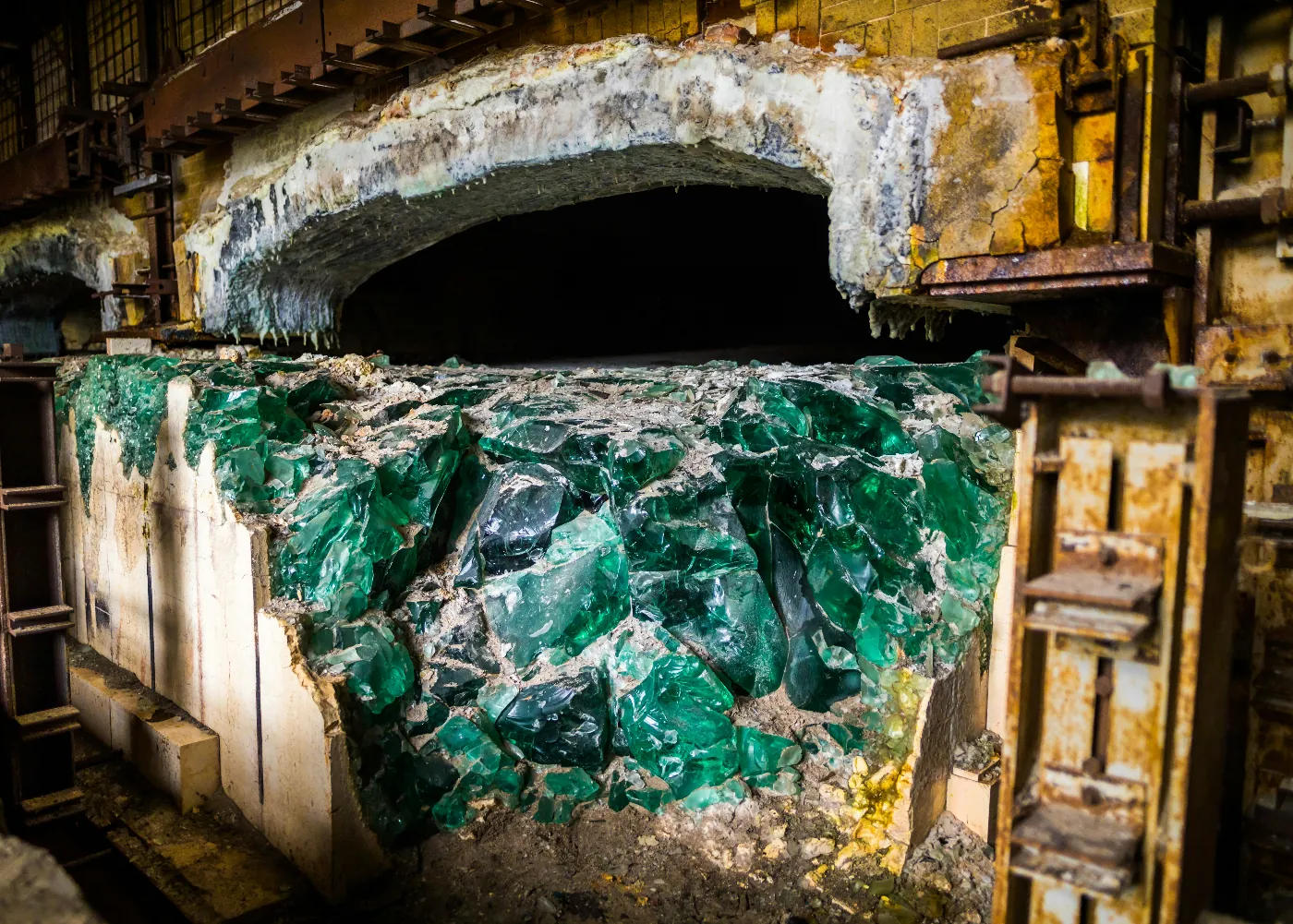
Charleroi (CRL)
A former industrial city that now stands out for its mining heritage, museums, and surprisingly lively urban culture scene — much more than just a convenient place to land.
- Street art around the city center for a more direct encounter with Charleroi’s urban side.
- Terrils and industrial heritage for understanding the city shaped by coal mining.
- Bois du Cazier for the clearest insight into the area’s social and mining history.
For many travelers, Charleroi is mainly the gateway into Belgium because Brussels South Charleroi Airport is located here. But the city is more than a practical stop. Charleroi has a distinctly industrial identity, a strong social history, and a rougher, more urban edge than many of Belgium’s more postcard-friendly places.
Street art, industrial heritage, terrils, and several UNESCO-listed landmarks all shape the city’s character. One of the better-known sites is Bois du Cazier, a former coal-mining complex that now serves as both a memorial and a heritage site tied to the region’s mining past. Charleroi is also home to the famous belfry of the town hall, included in UNESCO’s listing of the Belfries of Belgium and France. Another unmistakable feature of the city is its terrils — green mining slag heaps that still define the landscape today.
I landed here during a period of maximum terror alert. I had never seen an airport that empty before — except once in Pau, France, a few hours before a flight.
Leuven
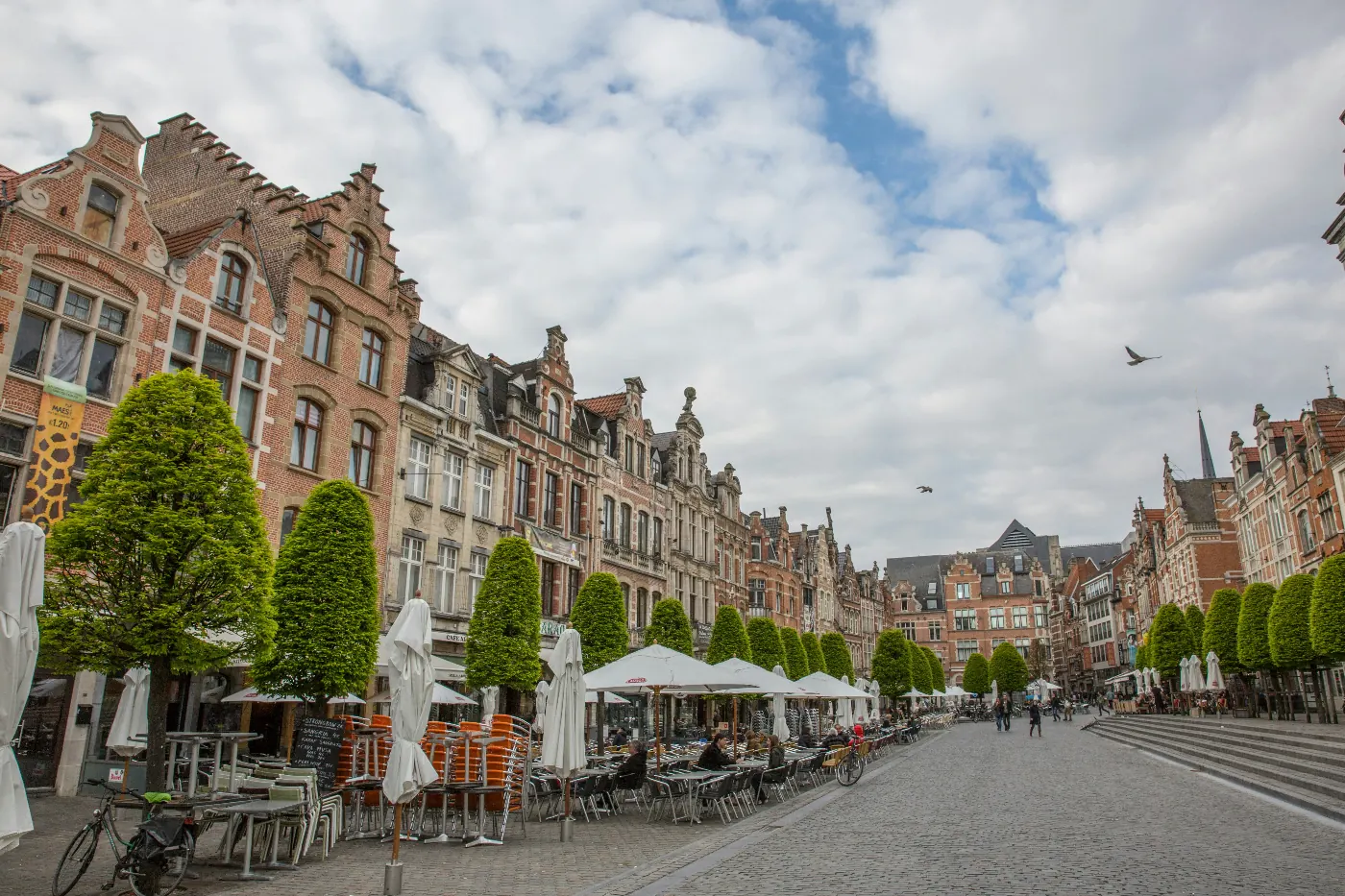
Leuven has a strong student-city pulse and one of the liveliest promenades in Belgium. Oude Markt is not called the “longest bar in the world” for nothing.
Beer — does it live up to the hype?
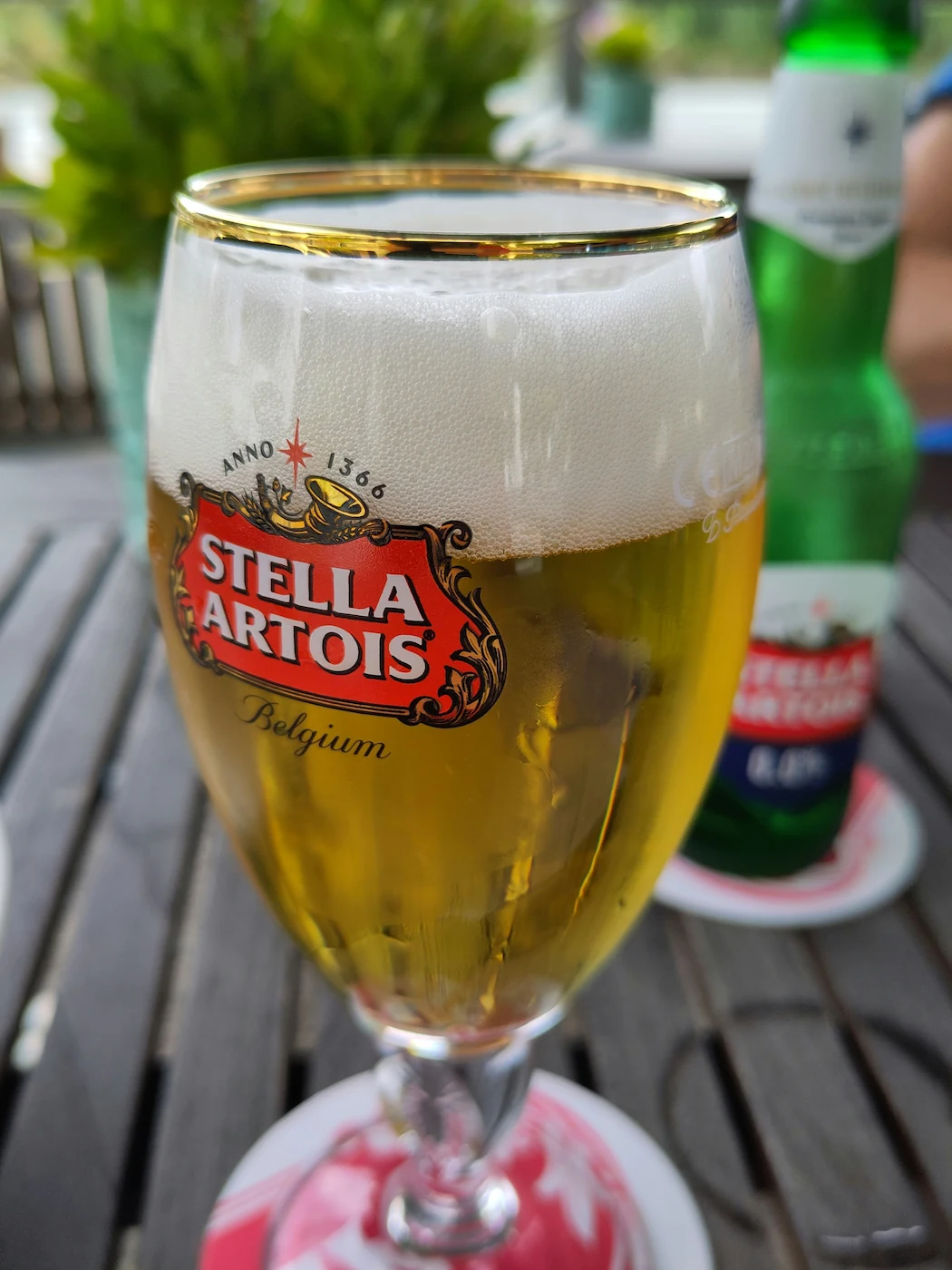
Yes — absolutely. Leuven is deeply tied to beer culture: AB InBev, the world’s largest brewing company, is closely linked to the city, and Stella Artois has its roots here too. You can feel that connection in the city’s evening atmosphere, especially around Oude Markt.
In Leuven, especially on Oude Markt — often called the “longest bar in the world” — beer culture spills across the entire square. One of the fun little bar quirks is how groups sometimes order another round: by banging on the metal lamps above the table. The sound carries across the bar, and the staff immediately know somebody is ready for more beer.
Itineraries
2 days · Brussels and Leuven
If you only have a weekend for Belgium, stay with Brussels and Leuven. This is the easiest first feel for the country: the capital gives you Grand-Place, the European Quarter, comic-book character and chocolate shops, while Leuven adds a more student-like, lively and relaxed evening rhythm.
- Day 1: Brussels — Grand-Place, Galeries Royales Saint-Hubert, Manneken Pis, the European Quarter and an evening walk through the centre.
- Day 2: Leuven — Grote Markt, the town hall, university atmosphere and Oude Markt as the best ending to the day.
- Base: Brussels or Leuven, depending on your arrival point and accommodation price.
- Transfer: Brussels–Leuven is a short train hop, so you do not need a car.
- Best for: a first visit, weekend, beer, chocolate and city atmosphere without complicated logistics.
3 days · Brussels, Leuven and Ghent
With three days, Ghent fits in beautifully. This is one of the best Belgian combinations because you get the capital, a student city and one of the most beautiful historic cities in Flanders without having to change accommodation every night.
- Day 1: Brussels — Grand-Place, galleries, Atomium or the European Quarter, depending on your interests.
- Day 2: Leuven — Grote Markt, the library, Oude Markt and a relaxed evening.
- Day 3: Ghent — Graslei, Korenlei, Gravensteen, the old centre and an evening walk along the canals.
- Train: Brussels–Ghent takes around 36 minutes on average.
- Rhythm: one base is enough; give Ghent a full day, not only a quick stop.
- Before booking: if you are still building your budget, accommodation plan and daily transfers, also check the travel tips.
4 days · Brussels, Leuven, Ghent and Bruges
Four days are a very good frame for classic Belgium. You can connect Brussels, Leuven, Ghent and Bruges, but each day should have a clear focus. Belgian cities are close, but they still need time for a walk, coffee, museum, beer and evening.
- Day 1: Brussels — Grand-Place, chocolate shops, comic-book traces and the European Quarter.
- Day 2: Leuven — university atmosphere, Grote Markt and Oude Markt.
- Day 3: Ghent — canals, Gravensteen and the evening city rhythm.
- Day 4: Bruges — the old centre, canals, Markt and a slower end to the trip.
- Train: Brussels–Bruges takes around 1 h 04 on average.
- Tip: both Ghent and Bruges are beautiful in the evening; if you can, do not visit both only in the morning.
- Best for: a first wider visit to Belgium without renting a car.
5–6 days · Add Antwerp or Mechelen
With five or six days, you can extend the classic triangle with Antwerp or Mechelen. Antwerp is larger, more urban, design-oriented and connected with fashion, while Mechelen is a good choice if you want something less visited but still historic and very accessible.
- Days 1–2: Brussels and Leuven.
- Day 3: Ghent.
- Day 4: Bruges.
- Day 5: Antwerp — the railway station, old centre, fashion, museums and port character.
- Day 6: Mechelen or a slower return through Brussels.
- Antwerp: a good choice if you want a bigger city contrast to Bruges and Ghent.
- Mechelen: a good choice for fewer crowds and a shorter, calmer trip.
- Logistics: do not change bases unnecessarily; most of the route can be done as day trips by train.
6–7 days · Flanders, history and a slower pace
If you have almost a week, Belgium starts opening up beyond the “prettiest cities”. That is when it makes sense to add the World War I sites of Flanders, Ypres, Waterloo, or one day that is not about another city but about understanding the place more slowly.
- Days 1–2: Brussels and Leuven.
- Day 3: Ghent.
- Day 4: Bruges.
- Day 5: Antwerp or Mechelen.
- Day 6: World War I Flanders, Ypres or Waterloo.
- Day 7: a slower day for museums, food or the return journey.
- For history: Ypres and Flanders Fields need a more serious, less touristy rhythm.
- For a first visit: do not add too many cities; Belgium is small but full of detail.
- For a realistic pace: before finalising the plan, also check the travel tips, especially the parts about costs, reservations and transfers.
3 recommendations for a good plan
Belgium is one of those countries where logistics look very simple on paper, but the details quickly slow you down on the road: a beautiful square, a good chocolate shop, a beer, a museum or a train that lets you add one more spontaneous stop.
- For 2–3 days, stay with Brussels, Leuven and Ghent.
- For 4 days, add Bruges, but give it enough time.
- For 5–7 days, add Antwerp, Mechelen, Waterloo or Flanders Fields.
- For most first visits, you do not need a car; the train is simpler and often faster.
- Belgium is better planned around cities and evenings than around the number of sights you can tick off.
Food
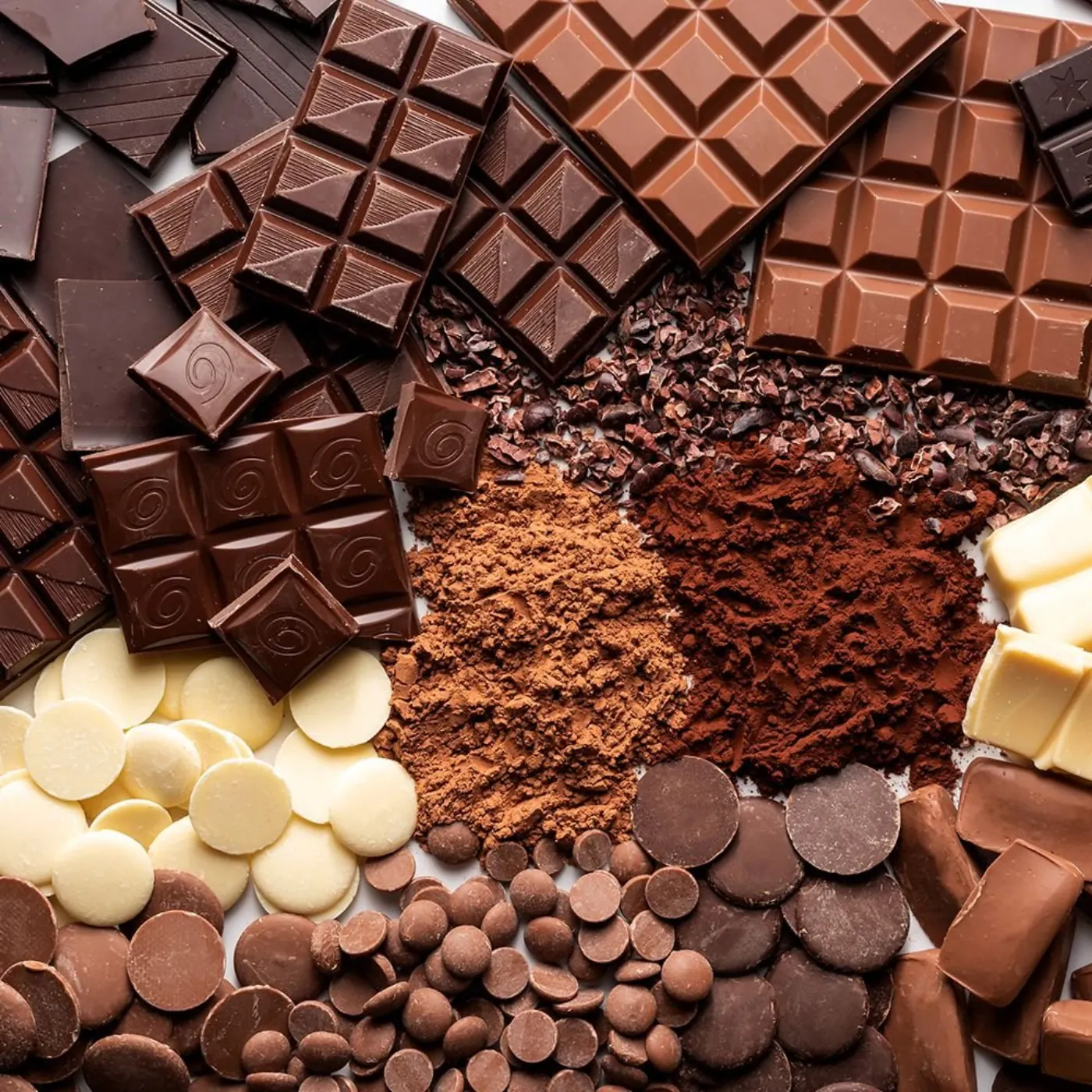
Belgium is one of those countries where pretending you are going to eat lightly becomes unrealistic almost immediately. Waffles, chocolate shops, and fry stands seem to be everywhere. Frites are not just a side here — they are practically a cultural statement. Chocolate is serious business. Beer even more so. With more than a thousand breweries, every night can end with a different glass and a completely different story.
Belgian chocolate has its status for a reason. Not because of branding, but because of how it is made. Belgium became an important center of cocoa processing in the 19th century, and it still ranks among the key reference points for quality chocolate today. One major turning point came in 1912, when Belgian chocolatier Jean Neuhaus invented the praline — a filled chocolate that quickly became one of the signatures of Belgian chocolate culture.
Interesting facts
Flanders and the battlefields of WWI
Flanders was one of the most tragic theaters of World War I. Around half a million people died here, and more than a million were wounded or went missing. Today, the region is filled with military cemeteries and memorials honoring fallen soldiers from many different nations — troops from roughly fifty countries fought in these battles. For Slovenians, it carries some of the same emotional and historical weight as the story of the Soča Front. This was also one of the first places on the Western Front where poison gas was used on a larger scale. In Ypres, the local museum gives visitors a vivid sense of what life and combat looked like in the muddy trenches of the war.
Castles
Belgium has a surprisingly dense concentration of castles — in fact, it is often said to have more castles per square kilometer than any other country in the world. There are more than three thousand in total, which makes it hard to know where to begin.
One of the most historically important is Bouillon Castle in the Ardennes, originally built in the 11th century. Other well-known names include Beersel, a well-preserved 14th-century castle; Gravensteen, dating back to the 12th century and once featured as a key attraction at the 1913 World Expo in Ghent; Gaasbeek, a 16th-century castle with richly decorated rooms and an art collection; and Freÿr, a 15th-century estate often described as a kind of “mini Versailles.”
Windmills
Belgium has a long tradition of using windmills. They were once used for sawing wood, pumping water, and grinding grain. You can still find quite a few historic windmills across the country dating from the 18th, 19th, and 20th centuries, and some are open to visitors. The biggest concentration is around Bruges.
Leuven and beer culture
Beer culture feels especially lively in university towns, and Leuven is one of the best examples. About 25 kilometers east of Brussels, the city is home to KU Leuven, founded in 1425, one of the oldest and most respected universities in Europe. That gives the place a youthful energy. The center of the evening scene is Oude Markt, often called the “longest bar in the world” because almost the entire square is lined with bars and cafés.
Practical tips
Documents
Belgium is part of the EU and the Schengen Area, so travel is usually straightforward for EU citizens. Still, your document should be valid and physically with you, especially if you are flying or travelling with children.
- EU citizens: a valid national ID card or passport.
- Children: each child needs their own travel document.
- Non-EU travellers: check visa rules, allowed length of stay and passport validity before booking.
- When flying: always check the airline’s document requirements too.
BRU and Charleroi airports
In Belgium, it matters a lot which airport you fly into. Brussels Airport is very well connected by train, while Charleroi is common for low-cost flights but needs more time for the transfer.
- Brussels Airport: the train to Brussels-Central takes around 18 minutes.
- Charleroi Airport: the shuttle to Brussels usually takes around 55–60 minutes, depending on traffic.
- For early flights: check the first transfer and do not rely only on the ideal daytime timetable.
- For late flights: check the last connections to your accommodation, especially if you are sleeping outside Brussels.
Trains between cities
Belgium is one of the easiest countries for getting around by train. For a first visit, the train usually makes more sense than a car because the main cities are close and the stations bring you straight into the urban logistics.
- Brussels–Ghent: around 36 minutes on average.
- Brussels–Bruges: around 1 h 04 on average.
- Brussels–Leuven: the fastest connections can be around 13–16 minutes, depending on the station and train.
- Brussels–Antwerp: the fastest connections are around 34–41 minutes.
- Practical: always check the timetable and prices for your exact travel day, because offers and rules can change.
Public transport
Brussels has metro, trams and buses. For a first visit, the best combination is walking and public transport, especially if you want to connect the old centre, the European Quarter, Atomium and more distant neighbourhoods.
- STIB/MIVB 1 day: a day ticket costs €9.00.
- Brupass: 1 journey costs €2.70, while a daily Brupass costs €9.50.
- Airport: for Brussels Airport, check special airport tickets or supplements.
- Practical: for a short visit, choose accommodation by good transport links, not price alone.
Train or car?
For Brussels, Leuven, Ghent, Bruges and Antwerp, you generally do not need a car. The train is more comfortable, faster and less stressful. A car only starts making sense if you want the Ardennes, smaller places, Flanders Fields or a more scattered road trip.
- Without a car: Brussels, Leuven, Ghent, Bruges, Antwerp and Mechelen.
- With a car: the Ardennes, Waterloo, smaller towns, countryside and more scattered historical sites.
- In cities: parking, one-way streets and low-emission zones can quickly become more annoying than useful.
- Best compromise: use trains for cities and a car only for the part of the trip where you really need one.
Car tips
If you travel around Belgium by car, expect a densely populated country, plenty of traffic around cities and strictly marked local speed limits. Pay special attention to low-emission zones in larger cities.
- Built-up areas: often 50 km/h, with 30 km/h around schools and in some urban areas.
- Outside built-up areas: often 70–90 km/h, depending on the region and road signs.
- Motorway: usually 120 km/h.
- Phone: handheld mobile phone use while driving is not allowed.
- Seat belt: mandatory for the driver and passengers; children need an appropriate restraint system.
Healthcare
The European Health Insurance Card is a good base for a temporary stay in Belgium, but it is not a replacement for travel insurance. The Belgian system generally accepts the EHIC with most doctors and hospitals.
- EHIC: take it with you together with an identity document.
- It does not cover everything: private healthcare, trip cancellation, luggage or repatriation.
- For active trips: additional insurance is sensible, especially if you go to the Ardennes or on a cycling route.
- Practical: save your policy number and assistance contact offline too.
Costs and reservations
Belgium is not necessarily extremely expensive, but costs add up quickly through accommodation, coffees, beers, chocolate, museums and trains. The biggest savings usually come from a good base, a sensible city order and fewer impulsive transfers.
- Accommodation: Brussels is practical, while Leuven or Ghent can be more pleasant for the evening rhythm.
- Food: waffles, chocolate, frites and beer add up quickly, especially in tourist areas.
- Museums: for larger museums and European institutions, check opening hours and reservations.
- Trains: check weekend discounts, special tickets and the exact price for your travel day.
Useful tips
Belgium uses the euro, and card payments are widely available. Still, a little cash is useful for smaller places, markets, public toilets or situations where the card terminal is not reliable.
- Currency: euro.
- Payments: card + a small cash reserve is the safest combination.
- Phone: within the EU, roaming is usually “roam like at home”, but check your data limits.
- Electricity: 230 V, 50 Hz; plug types C and E are mainly used.
- Practical: prepare an offline map and a train or public transport app for the cities.
Emergency numbers
Save emergency numbers before the trip. In Belgium, 112 works for emergencies, while 101 is important for urgent police assistance. During storms, 1722 may also be activated for non-urgent fire brigade help.
- 112: emergency medical help, fire brigade and general emergencies.
- 101: urgent police assistance in Belgium.
- 1722: non-urgent fire brigade help during storms or floods, when the number is activated.
- 1733: out-of-hours doctor for non-urgent medical problems.