
France
France
France at a Glance
France is not the kind of country you can explain in just one way. You can come for Paris, Versailles, or Provence, but you really start to feel it when you also make time for the smaller rituals: a morning boulangerie stop, a market in an old town, a glass of wine in the evening, a train ride between landscapes, or a long walk through a place that may not be world-famous, but has real character.
What draws me to France most is that blend of elegance and everyday life. One day you can be surrounded by museums, avenues, and history, and the next among vineyards, olive trees, pastures, the coast, or beneath serious mountains. In my Camino story, France opened itself to me in an even more distinct way: through Pau, morning chansons in the background, the smell of croissants and café au lait, and the feeling that a great journey can begin very quietly, almost unnoticed.

Guide to France
France has 18 administrative regions, 13 in European France and 5 overseas. For travel planning, that matters because France does not really make sense as one single destination.
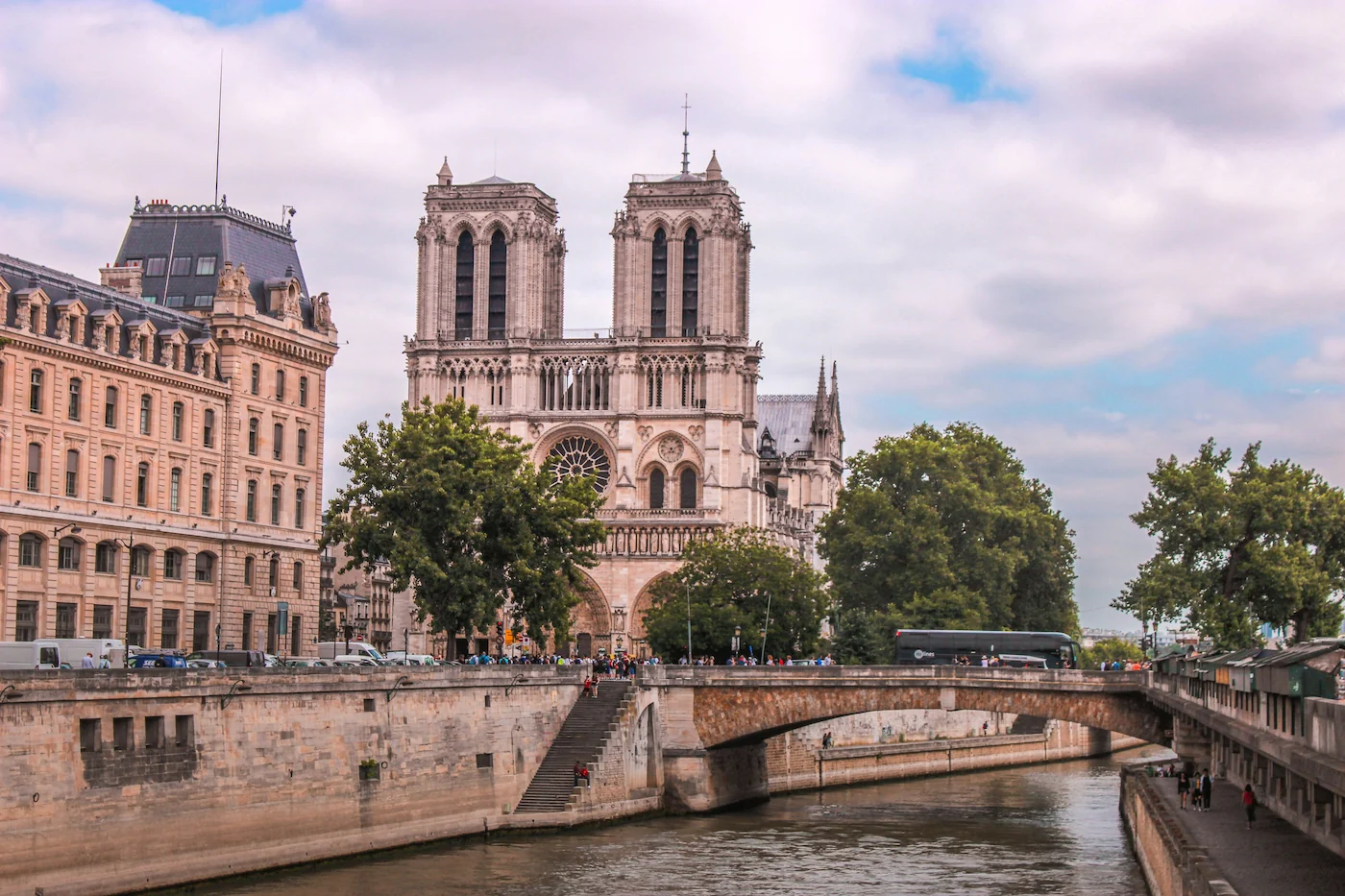
Île-de-France is the classic first encounter with Paris along the Seine, museums, neighborhoods, and Versailles as a royal escape from the city. In Provence, lavender, olive trees, and villages dominate, and the day often feels measured by light. The Southwest is rich with wine and oysters around Arcachon. The Pyrenees, meanwhile, form the scenic hiking edge of the country, where France begins to lean toward Spain.
Iconic Versailles is not just a “nice palace,” but a colossal palace with around 2,300 rooms spread across more than 63,000 m². Bordeaux boasts more than 350 historic monuments. High above Chamonix, the Aiguille du Midi cable car lifts you to 3,842 meters, into a high-alpine world ruled by winter, thin air, and a very different sense of scale. On the Atlantic side, Dune du Pilat is the tallest sand dune in Europe and a very concrete reason to extend toward Arcachon.
High-speed trains are excellent for covering longer distances.
Three Museums That Are Not Louvre
Musée du Quai Branly – Jacques Chirac
Paris, a little differently
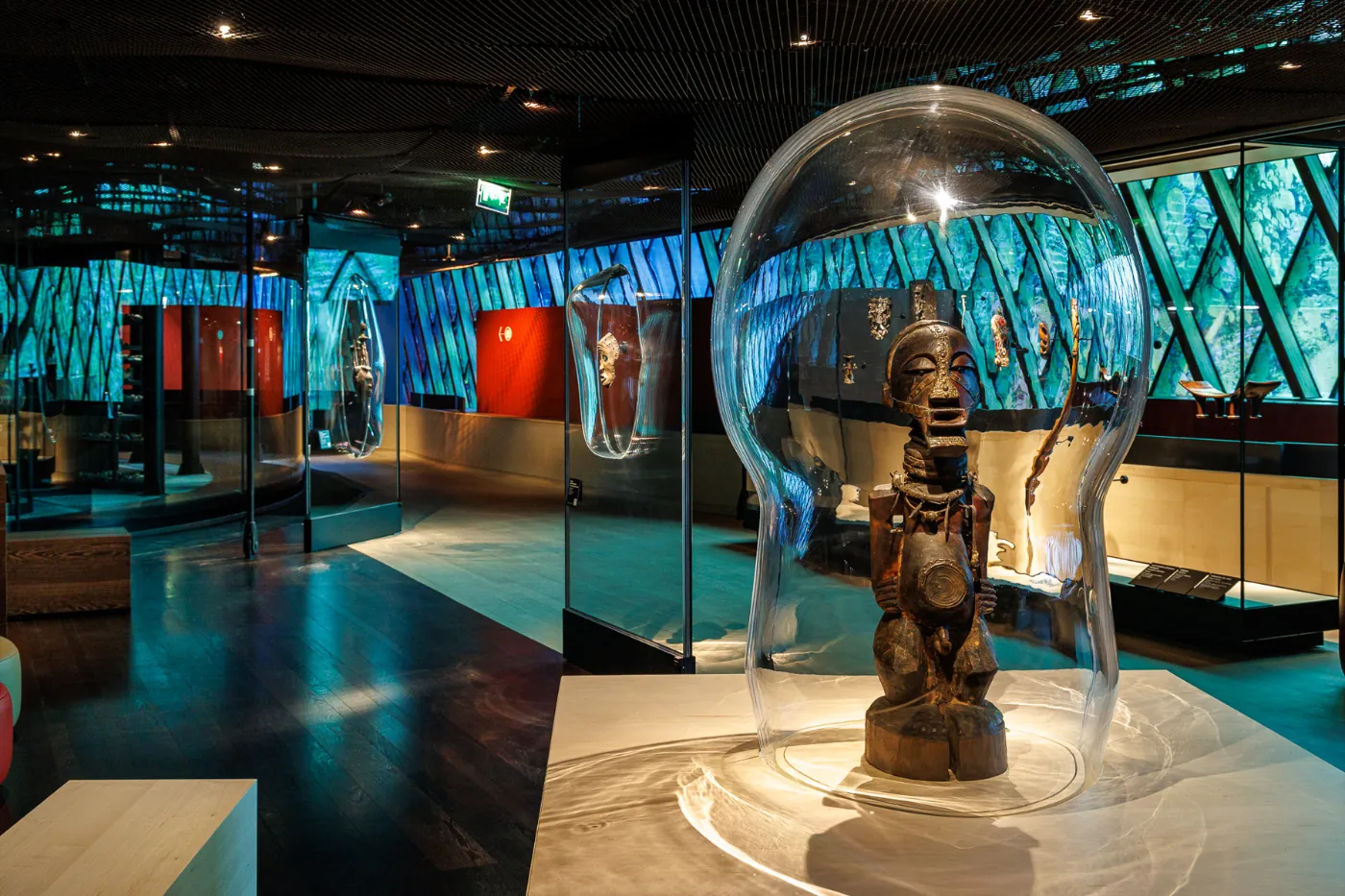
If I were looking in Paris for a museum that feels more like a step away from the classic “must-see” routine, I would get to Musée du Quai Branly. Many people only know it vaguely, but after visiting, they often remember it as one of the better cultural experiences in Paris.
Museum is dedicated to the arts and cultures of Africa, Asia, Oceania, and America, so even by content alone, it offers a different focus from the more traditional Paris institutions. The permanent display includes around 3,500 works, arranged as a continuous flow through different geographic areas, which makes the visit feel intuitive and visually powerful. Another major plus is Jean Nouvel’s architecture.
This is the kind of museum you visit mainly for the atmosphere. Compared with the most crowded Paris museums, it feels less predictable.
- Opening hours: Tuesday, Wednesday, Friday, Saturday, and Sunday 10:30 a.m.–7:00 p.m.; Thursday 10:30 a.m.–10:00 p.m.; Monday closed.
- Why highlight it: for its strong permanent collection from around the world and for one of the most recognizable contemporary museum buildings in Paris.
Centre Pompidou
a modern classic
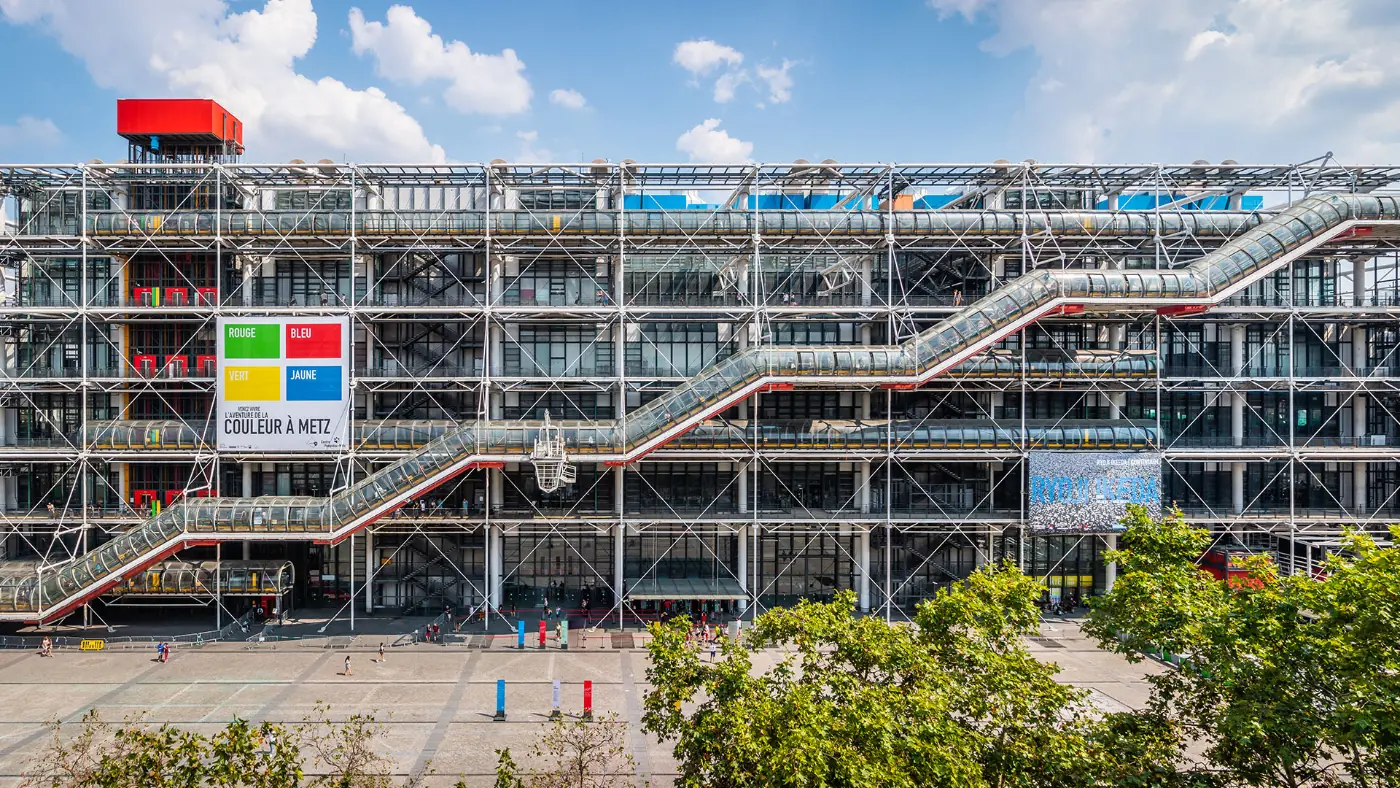
If the Louvre is Paris in one grand historical gesture, Centre Pompidou is Paris in a bolder, more open, and slightly rebellious version. The architecture alone, with its exterior pipes, exposed structure, and famous escalators, feels like a statement.
For me, Pompidou is one of the best contrasts to a classic day in Paris because it takes you from the old stone city straight into modern and contemporary art. It is important, though, to note the current situation: the Paris building is closed to the public for a major renovation, with reopening planned around 2030, while the program and parts of the collection continue through the Constellation project and partner locations.
- Current status: the Paris building is currently closed for renovation.
- Why include it anyway: because it remains one of Paris’s key cultural institutions and one of the most recognizable examples of 20th-century architecture.
Catacombes de Paris
city’s darkest layer
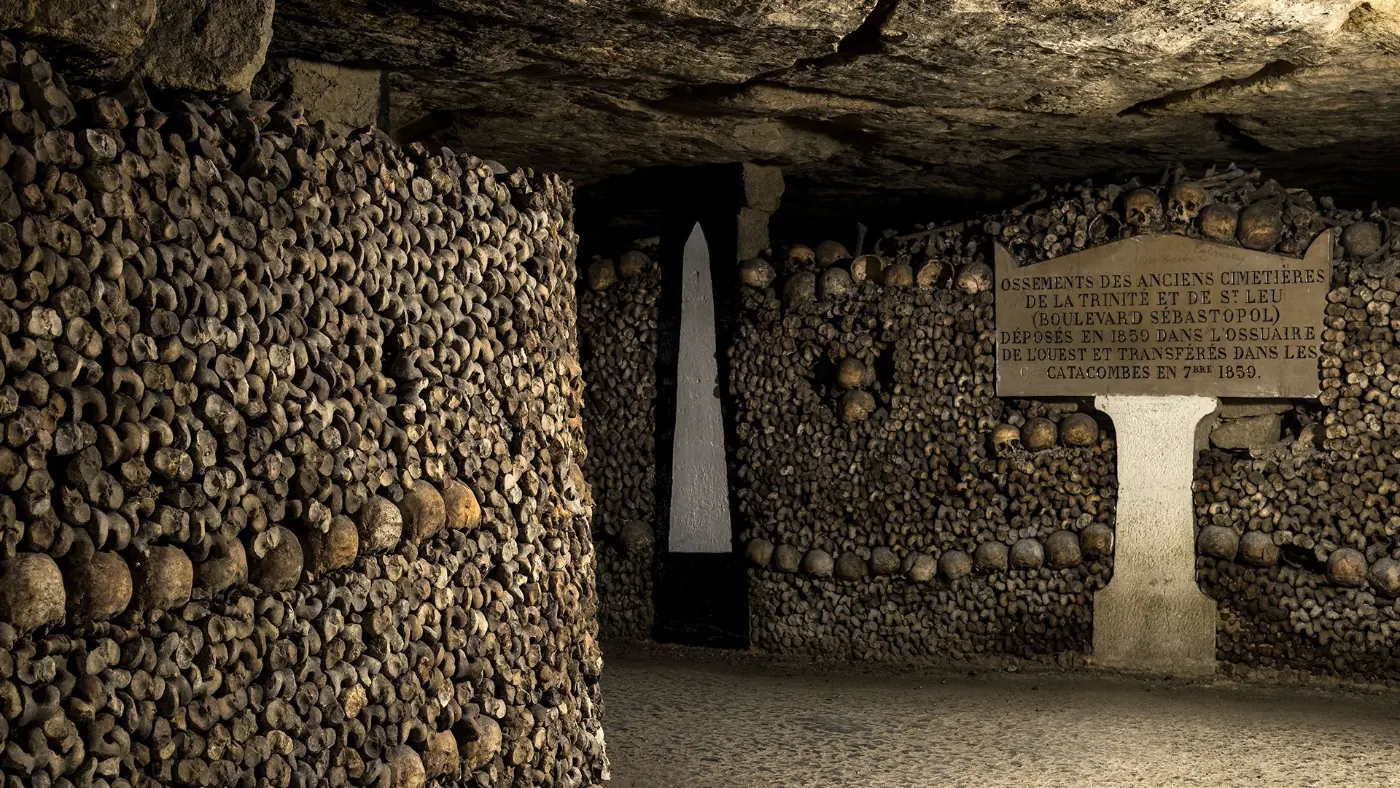
The Catacombs are not a “museum” in the classic sense, and that is exactly why they leave such a strong impression. This is not the postcard version of Paris, but its underground, cold, and very physical layer.
The descent takes you about 20 meters underground through a one-way loop around 1.5 kilometers long. The route includes 243 steps, and inside it is around 14 °C and quite damp. Booking a timed slot in advance is recommended, and the visit is better earlier in the day.
- Opening hours: usually Tuesday through Sunday, 9:45 a.m.–8:30 p.m.; last entry 7:30 p.m.
- What makes the visit distinctive: the route is one-way, you cannot turn back, and the stairs are a required part of the experience.
- Why I would highlight them: because they show Paris in a completely different way from the classic museums — more historical, more physical, and more unforgettable.
Top Regions

Paris
Paris exists in the imagination before you even arrive. Somewhere between the images, stories, museums, bridges, and lights along the Seine, it builds itself up as a promise — a classic, but for a reason.
Paris is not special only because of fashion and landmarks, but because of the rhythm carried by its museums, bridges, parks, small cafés, and the feeling that history is literally built into urban life. The Eiffel Tower is the most obvious symbol and a useful point of orientation — 330 meters of iron structure, built for the 1889 World’s Fair and still a technological marvel.
Versailles is one of the best examples of how quickly you can step out of the Paris rhythm and into another world. The palace complex, gardens, and entire estate are almost a full-day story, especially if you want to check off the most famous rooms.

Provence
Provence is beautiful in photographs, but you only really understand it through all the senses: in the light, the smell of lavender and olive trees, markets, cicadas and stone countryside houses.
The most natural Provençal arc is the Luberon with its hilltop villages, Aix-en-Provence for the urban rhythm, and Arles or the Alpilles, where the south becomes distinctly Provençal. Lavender fields are one of the best-known symbols, and the region connects beautifully with markets and local products.

The Atlantic and the Southwest
The southwest of France has a breadth that Paris and Provence do not. Bordeaux is not only a wine name, but a large stone city on the Garonne: it has more than 350 protected historic monuments, and its UNESCO area covers 1,810 hectares, or almost half the city. That is why a walk along the quays, past Place de la Bourse and the Miroir d’eau, quickly reveals the charm of the region.
From there, the road ahead is less set up as a sightseeing route and more stretched out among vineyards, long roads, markets, and places where you stop because of the view, not because they are marked as mandatory stops. Pau, near the Pyrenees, adds one final transition: Boulevard des Pyrénées, views toward the mountains, and the feeling that the French southwest is slowly tipping toward Spain.
For me, Pau in particular stayed in memory as a beautiful, quiet, and very French introduction to the Camino.

The Alps
The French Alps have exactly the combination I like most in the mountains: panoramic views, serious peaks, alpine lakes, and very solid infrastructure, which makes it much easier to plan either a short trip or a longer active journey.
Chamonix is almost the obvious reference point here. Not only because it sits beneath the Mont Blanc massif, but because it shows the full range of this world so well. From town, in just over twenty minutes by cable car, you can be at Aiguille du Midi at 3,842 meters. That is why a steady and not-too-full stomach is a good idea.

The Pyrenees
The Pyrenees have a different character for me than the Alps. They feel less raw and more closely tied to the very idea of the road. Here, it is not only about the view, but about the feeling of the place.
The French side of the Pyrenees is powerful already because of its national park, high-mountain lakes, waterfalls, and valleys that still carry a very distinct mountain character. If you want one truly strong reference point, Gavarnie feels like a huge natural amphitheater for an excellent performance by nature.
That is exactly why this part of France feels so strongly connected to the Camino experience for me as well. When the Pyrenees begin to appear in the distance, the journey gains a kind of weight that cities simply do not have.
Food
France, to me, is never only about “where to go,” but also about “how to eat.” I take the daily meal as part of the atmosphere and often as part of the identity of the place itself.
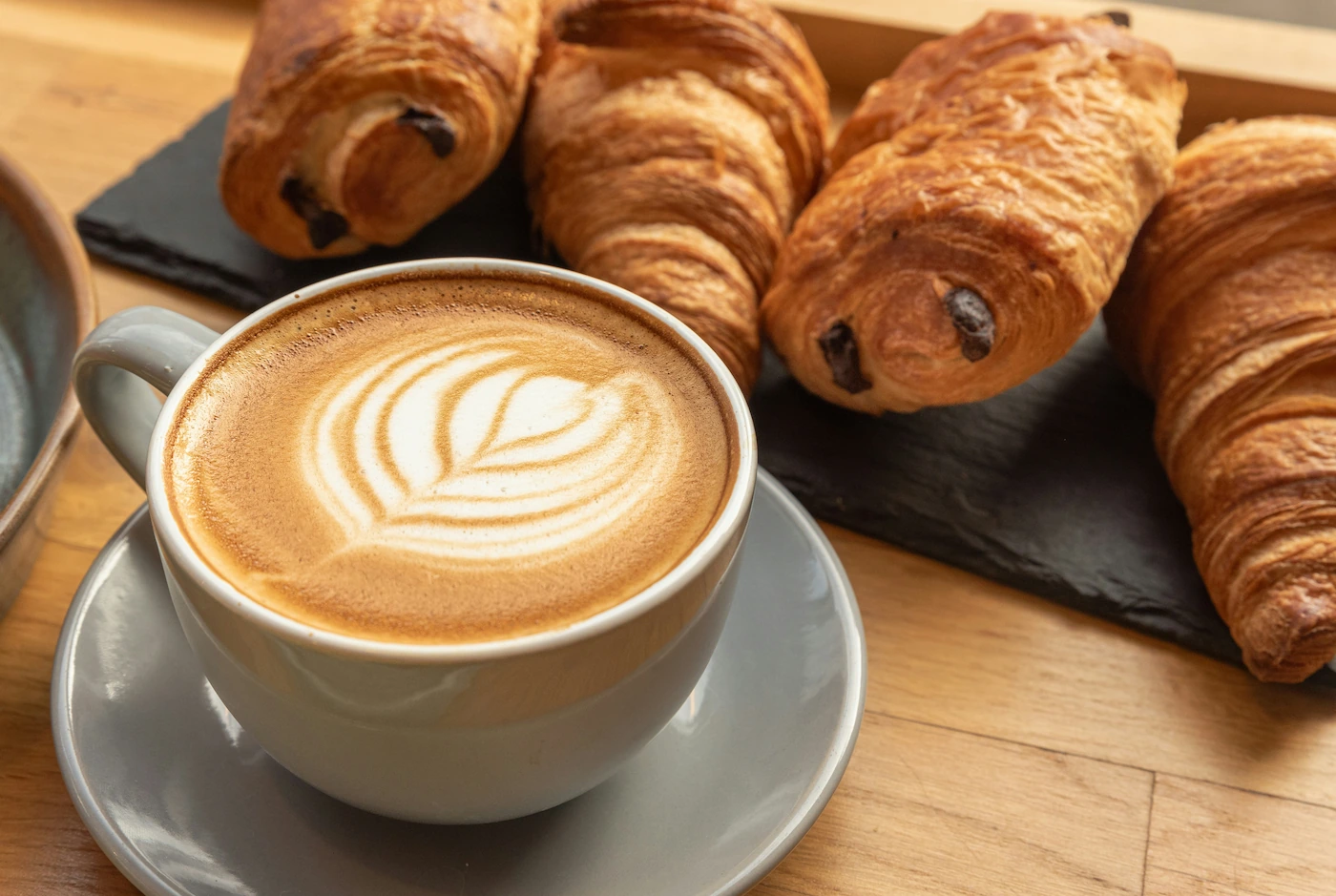
In France, food is a daily ritual: in the morning, the smell from the boulangerie of croissants, tartines, or a baguette with butter and coffee; during the day, a simple menu du jour in a bistro; in the evening, a glass of local wine, cheese, and something seasonal and regional. That is no coincidence: the gastronomic meal of the French has been on UNESCO’s list of intangible cultural heritage since 2010, and the culture of the French baguette since 2022.
Flavors change quickly from region to region. Paris is for bistros, bakeries, cheeses, and desserts; Provence for olive oil, garlic, herbs, markets, ratatouille, aïoli, or bouillabaisse; the southwest for wine, duck dishes, oysters around Arcachon, and canelé, the small Bordeaux pastry with a caramelized crust and soft center. Bordeaux is also one of France’s great wine stories: the region has 65 appellations, more than 4,600 wine producers, and around 94,600 hectares of vineyards, with red wines dominating.
In my Camino story, France first revealed itself quite simply: through the smell of bakeries, chansons coming from cafés, and the joy of starting the day with café au lait. Maybe that is the best French culinary introduction: not necessarily a prestigious restaurant, but a small morning ritual that gives a city or village its flavor.
An Introduction to the Camino
If there is one thing about France that especially gets to me, it is the Camino. Here, the route does not always yet have that most famous and most “pilgrim-like” energy that many people primarily associate with Spain.
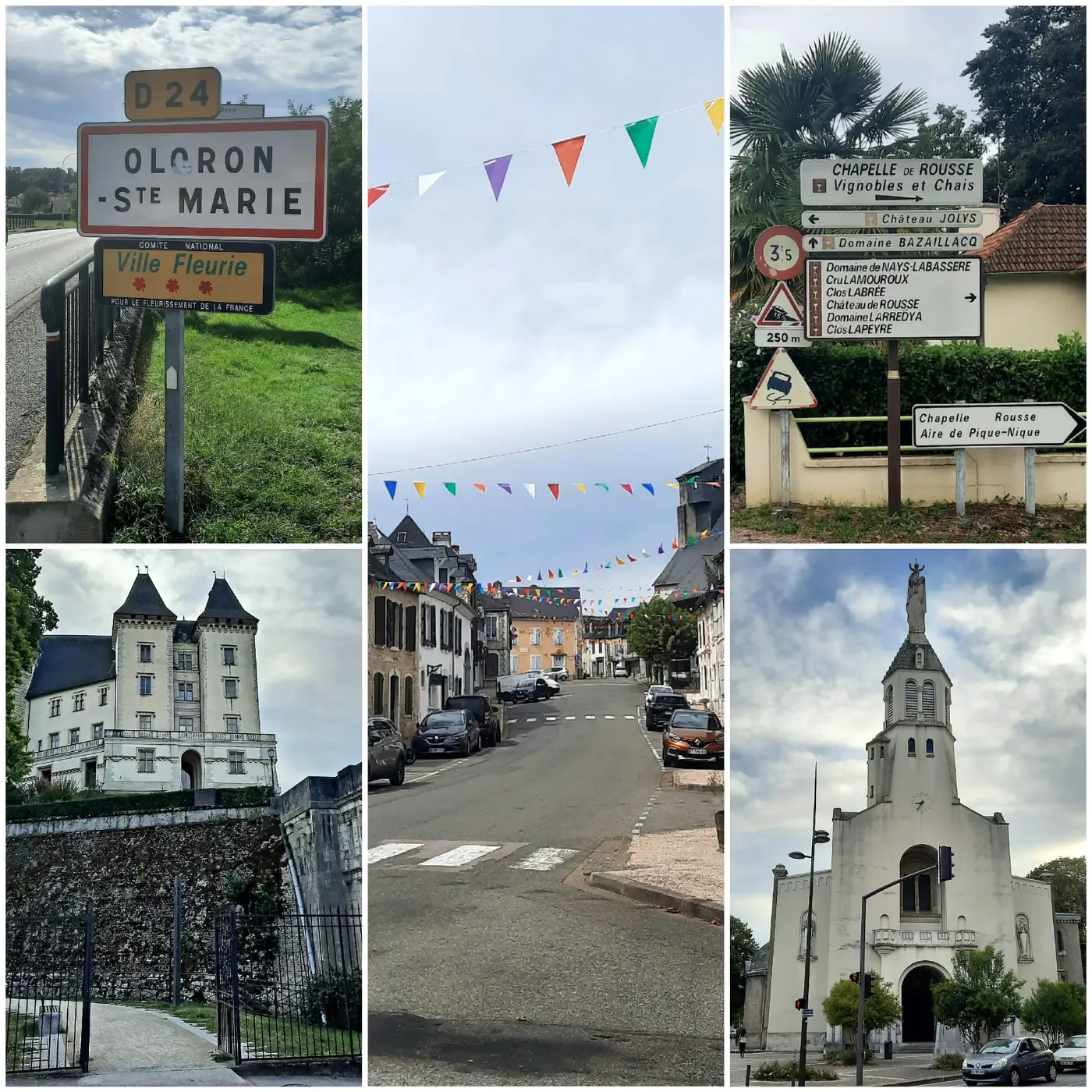
In my story, it all began in Pau. The morning was crisp, the city still sleepy, autumn leaves lay along the sidewalks, chansons drifted out from cafés, and near the bakeries it smelled of croissants and café au lait. It was the kind of beginning that is not loud, but stays with you. I had the feeling I was in the right place even before the main part of the journey had really begun.
The official and best-known French entry into the Camino story is broader than my personal experience, though. Among the most famous routes is the Via Podiensis, or GR65, from Le Puy-en-Velay to Saint-Jean-Pied-de-Port, around 750 kilometers long and usually divided into several stages. Saint-Jean-Pied-de-Port remains one of the most recognizable places of beginning before continuing toward Spain.
What I especially like about the French section is that the Camino here still breathes strongly through the landscape.
I joyfully greeted the land where, on that fresh autumn morning, the journey of my life began. It all unfolded in front of the Les Floralies bis apartment in the city of Pau, in the heart of Nouvelle-Aquitaine. It was September 7, 2022. The saying that you can judge the day by its evening best described the feelings running through me at the beginning of my journey.
Practical Info
When to Use the Train and When to Use a Car
The train is best for long distances between cities, while a car becomes useful in places where the journey is really about the landscape: villages, vineyards, markets, mountain passes, beaches, and smaller places without good connections.
- Train: Paris, Lyon, Bordeaux, Strasbourg, Marseille, Avignon.
- Car: Provence, Luberon, Alpilles, wine regions, parts of the southwest, and mountain valleys.
Public Transport
In Paris, a car is usually not an advantage. The metro, RER, buses, and trams are more useful for most visits, especially if you choose accommodation near a good metro or RER line.
- Metro-Train-RER: a single ticket costs €2.55.
- Bus-Tram: a single ticket costs €2.05.
- Airports: the Paris Region ↔ Airports ticket costs €14.
- Practical: for multiple rides, check Navigo Easy, Navigo Liberté+, or the current daily options.
Tolls and Speed Limits
French motorways are fast, but often tolled.
- Motorway: usually 130 km/h.
- Expressway: often 110 km/h.
- Outside built-up areas: often 80 km/h, unless signs indicate otherwise.
- Tolls: amounts vary by section.
Crit’Air Sticker
If you are driving into Paris, Lyon, Strasbourg, Marseille, Toulouse, or another city with a low-emission zone, check Crit’Air. The sticker also applies to foreign vehicles, and it is best to order it from the official website rather than through expensive intermediaries.
- Price: on the official website, €3.11 + postage.
- For France: currently €3.11 + €0.74 postage.
- For international delivery: postage is higher, so order it in good time.
Seat Belts and Phone Use
When driving in France, it is useful to know a few concrete fines too. Seat belts are mandatory for everyone in the vehicle, and using a handheld phone while driving is prohibited. The same applies to headphones or in-ear devices that transmit sound.
- Unbelted passenger: €135 fine.
- Driver without a seat belt: €135 fine and 3 points deducted in the French system.
- Handheld phone while driving: €135 fine and 3 points deducted.
- Headphones while driving: prohibited; for motor vehicle drivers, €135 fine and 3 points deducted.
- Prompt payment: for 4th-class fines, the amount may be reduced to €90.
Insurance
For EU citizens, the European Health Insurance Card is a very important basic layer of cover, but it is not the same as travel insurance. In France, you often pay the doctor first and then claim reimbursement afterward.
- EHIC: use it with providers in the public or contracted healthcare system.
- It does not cover: private healthcare, trip cancellation, luggage, or transport home.
- For mountains and the Camino: additional insurance makes a lot of sense.
Payments, Electricity, and Phone
Cards are very useful in France, but some cash is still practical for markets, smaller cafés or restaurants, public toilets, or places outside the main tourist areas. For mobile phones within the EU, roaming generally works like at home.
- Electricity: 230 V, 50 Hz; mainly type C and E sockets are used.
Emergency Numbers
It is worth saving emergency numbers before you travel. In France, the European emergency number 112 works, and there are also separate numbers for medical emergencies, police, and firefighters.
- 112: European emergency number.
- 15: SAMU, emergency medical service.
- 17: police.
- 18: firefighters.
- 114: SMS/video number for deaf and hard-of-hearing people.