Turkey
Turkey
between Europe and Asia
Turkey at a glance
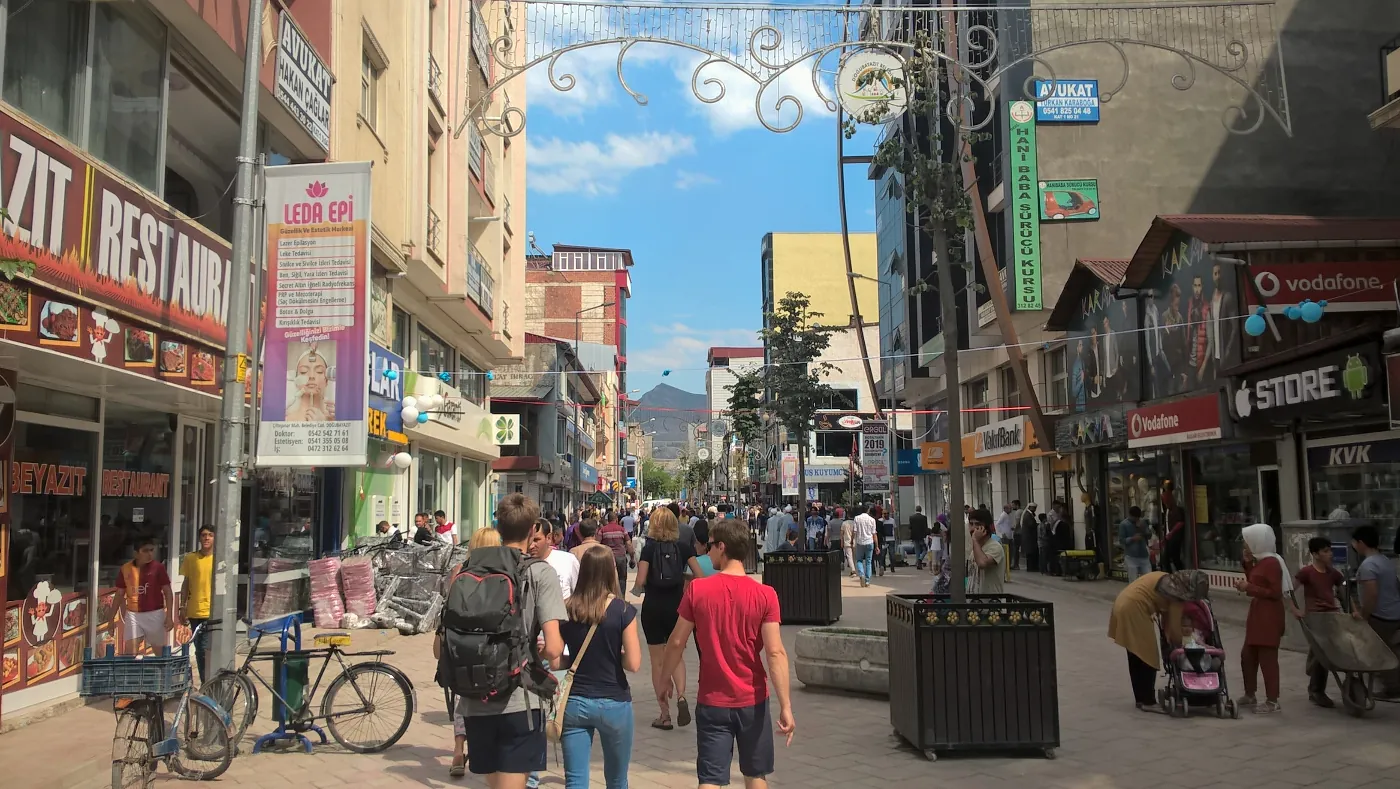
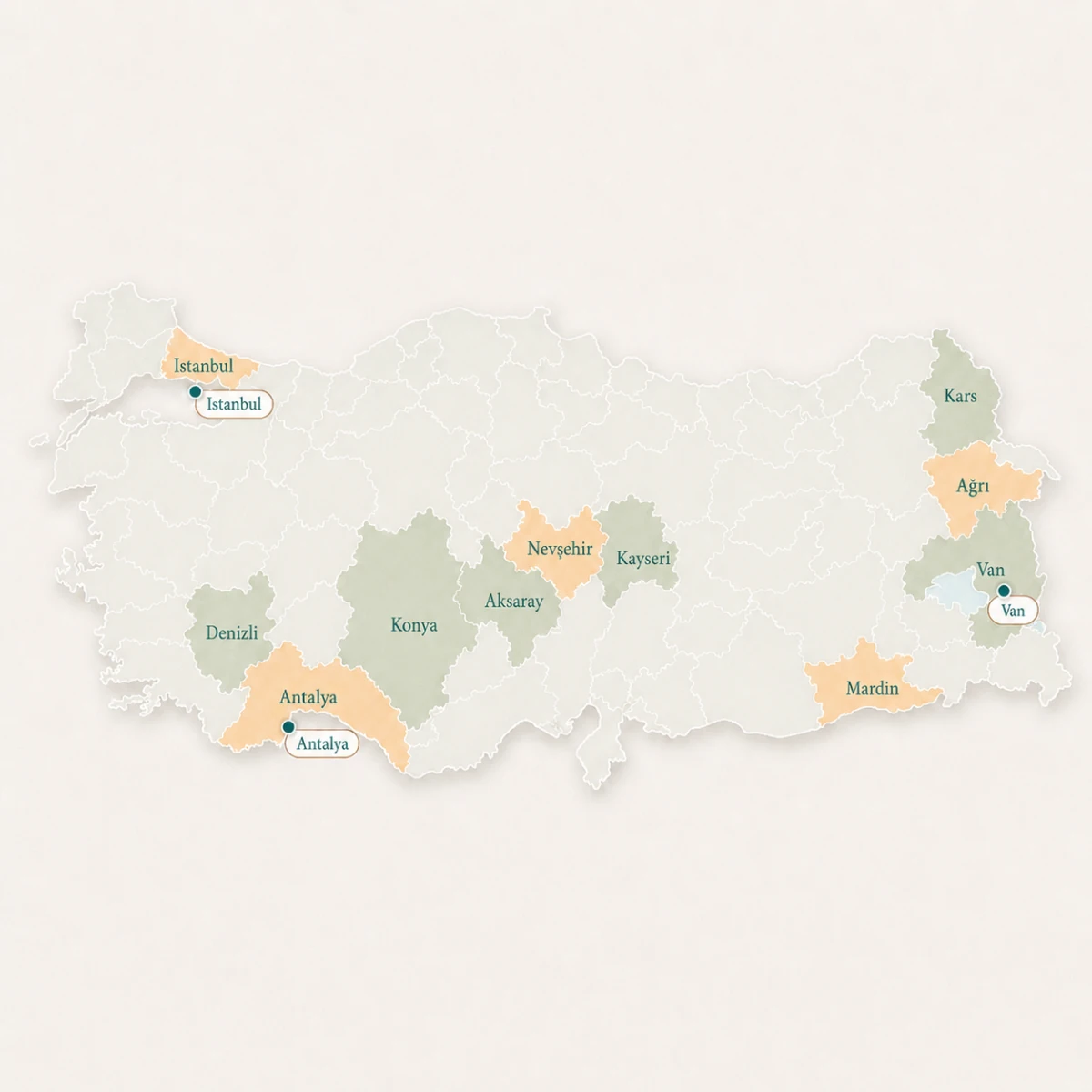
Turkey is a large, stretched-out country where the travel feeling often changes: the west is more urban, coastal, and used to tourism, while the interior and east feel more Anatolian, dry, slower, and often much more direct.
- Continents: about 97% of the country lies in Asia and about 3% in Europe.
- Biggest contrast: Istanbul and the coast on one side; Cappadocia, Konya, Dogubeyazit, and Ararat on the other.
- For a first visit: Istanbul, Cappadocia, or Antalya.
- For a more expedition-like feel: Van, Dogubeyazit, and Ararat.
- For food: kebap, pide, lahmacun, Turkish coffee, baklava, salep, and şalgam.
- For drummers: in Turkey, it is worth trying traditional Turkish cymbals.
A guide to Turkey
The best way to understand Turkey is as a crossing point between worlds. In the west, Istanbul hits first: the Bosphorus, bazaars, mosques, ferries, history, and the feeling of a city that never belongs to just one continent. Istanbul can be a city break on its own, but it is also the country’s biggest logistical hub for continuing deeper into the interior.
The southwest with Antalya brings the coast, cliffs, a warmer rhythm, and an easier first step into travel. Once you start moving inland, the landscape becomes more muted in color, but still varied. This is the Anatolian part of the route, where distances are longer, settlements are fewer, conversations are more direct, and the morning call to prayer is far more effective than a phone alarm.
Cappadocia is the most fairytale-like part of the trip: fairy chimneys, valleys, underground cities, cave hotels, and balloon flights. The east of the country is a different story. The area around Van, Dogubeyazit, and Ararat is drier, more remote, and far less polished. There, Turkey loses its postcard softness and takes on a strong feeling of border, mountain, and real distance.
That is why it is good to plan Turkey in chapters, not as “just another country to do quickly.” Istanbul is the city story, Cappadocia is the visual and geological experience, and Ararat is the trekking-expedition highlight. Together, they create a very different Turkey from the one you see in classic tourist photos.
Regions
West
The western part of the country is easier for a first contact: Istanbul has metros, ferries, historic neighborhoods, tourist flows, and a huge choice of accommodation. Antalya and the Mediterranean side are more coastal, brighter, and more accustomed to tourism. Here, you often experience Turkey through city rhythm, cliffs, bazaars, coffee, dinners, and logistics that are relatively simple.
East
The farther east you go, the more the landscape and the way of traveling change. The area around Dogubeyazit and Ararat is more barren, brown, open, and less polished for tourists. In conversations, you may quickly sense a more traditional view of family, marriage, and gender roles.
How should you use this when planning?
- For a comfortable trip: Istanbul + Cappadocia + Antalya.
- For a stronger contrast: add Konya and the route into the interior.
- For a “real” eastern experience: Van, Dogubeyazit, Ishak Pasha, Ararat.
- For photography: in the east, not everything is beautiful, but it is often very authentic.
Istanbul
Highlights
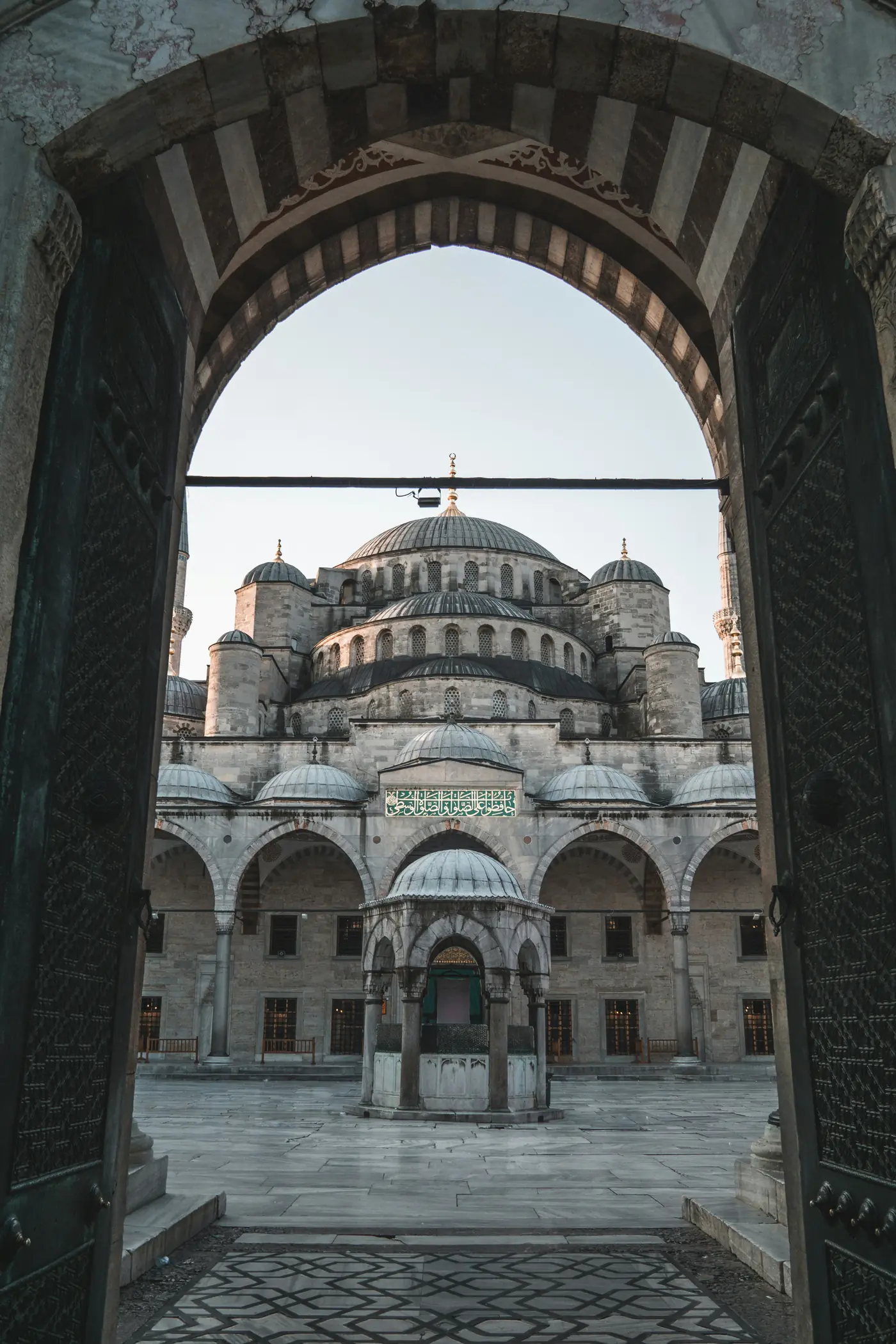
Istanbul is the geographic and symbolic heart of Turkey’s contrast. The Bosphorus separates Europe and Asia, yet the city works like one living organism: mosques, bridges, bazaars, tea, traffic, history, and modern urban noise.
If it is your first time in the city, it usually makes sense to start with Sultanahmet, Hagia Sophia, the Blue Mosque, Topkapi Palace, the Grand Bazaar, and a walk to the waterfront. For a better feel for the city, add a ferry across the Bosphorus, Galata, Karaköy, or the Asian side.
Istanbul Airport is a story of its own. A huge terminal, long corridors, many transfers, and the feeling that you are moving through a city inside a city. If you have a short connection, do not be too optimistic: the distances can be serious, and the process takes more time than you want to admit.
Moonlike landscape
Cappadocia
Antalya
The notes capture the transition well: Antalya on the southwest coast of Anatolia, cloudy outlines of the Taurus Mountains, then the drive inland and Haris, the guide who knew how to turn even ordinary logistics into a story. Before Cappadocia, Turkey starts moving away from the coastal idea and becomes drier, more Anatolian.
Konya is a strong stop in this transition: the morning call to prayer, mosques, salep, şalgam, baklava, and the feeling of a city where religious and everyday rhythm are far more present than in tourist coastal towns.
Cappadocia is best planned for at least 2–3 days. If you want a balloon flight, add one extra buffer day, because flights depend on the weather. If you do not have a car, the Red Tour and Green Tour are the most practical solution; with a car or driver, it is easier to stop in the valleys and at viewpoints.
Hot-air balloon flight
The most iconic Cappadocia experience. Flights take place at sunrise, last about one hour, and the full program with hotel pickup takes up a good part of the morning.
- Rough price: about €150–450; for a classic shared flight, often plan €150–280.
Göreme Open Air Museum
The most classic cultural visit in Cappadocia: churches, monastic spaces, and frescoes carved into soft volcanic rock.
- Visit time: 1.5–2.5 hours.
- Rough price: about €10–20; the Dark Church is often an extra €5–6.
- Tip: go early in the morning or late in the afternoon, when there are fewer groups.
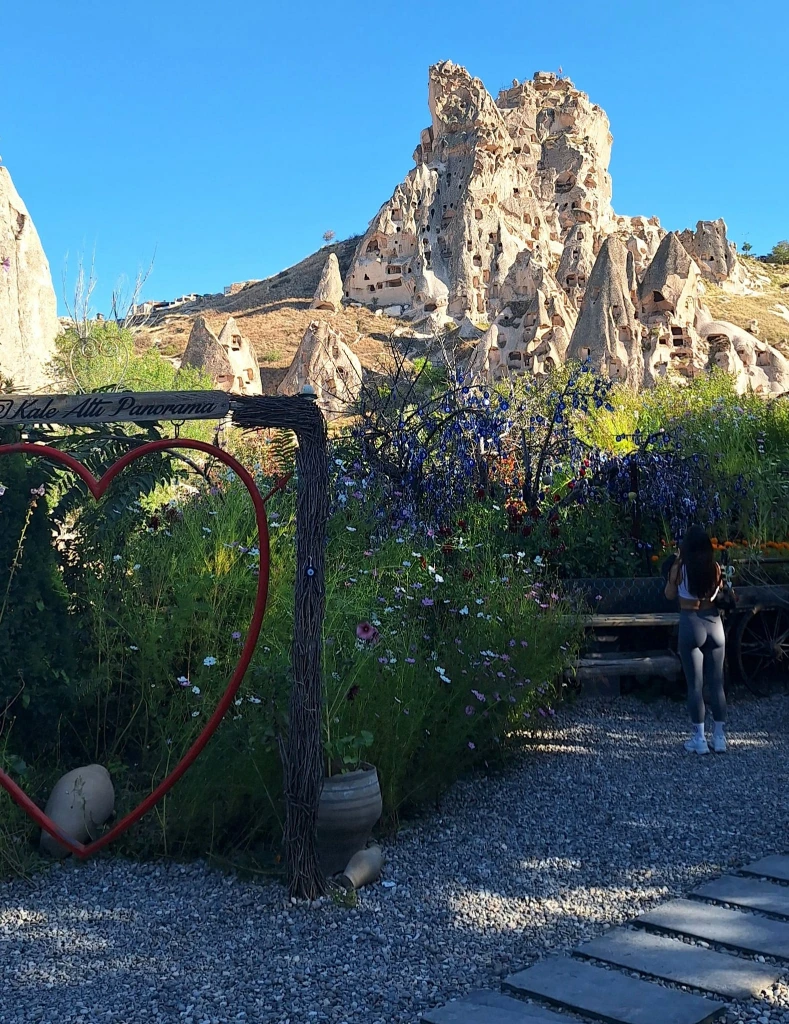
Uçhisar Castle
The highest viewpoint around Göreme. It is not necessarily the longest visit, but it is very useful for orienting yourself in the landscape.
- Visit time: 45–75 minutes.
- Rough price: a few euros; check on site.
- Tip: a good choice for sunset, if it is not too windy.
Derinkuyu or Kaymaklı
The underground cities are one of Cappadocia’s most unusual experiences. Tunnels, ventilation, storage rooms, and shelter spaces show that this landscape is not interesting only above ground.
- Visit time: 45–90 minutes.
- Rough price: about €13–20 per location.
- Tip: not ideal for claustrophobic visitors; a guide helps a lot.
Ihlara Valley and Selime
The more hiking-oriented part of Cappadocia: a valley, a river, rock-cut churches, and the feeling that you are stepping away from the most tourist-heavy core.
- Visit time: half a day; with the Green Tour, usually most of the day.
- Rough price: Ihlara about €10–15, depending on the ticket system.
- Tip: good shoes, water, and a little reserve for walking.
Paşabağ, Zelve, and Devrent
Classic valleys and rock forms where Cappadocia shows its most “fairytale” shape. Paşabağ is very well known for fairy chimneys, while Devrent is known for imaginative shapes.
- Visit time: 1–3 hours, depending on the combination.
- Rough price: Zelve/Paşabağ about €10–15.
- Tip: very photogenic, but also very crowded in the middle of the day.
Avanos
The town on the Kızılırmak River is known for pottery. A good stop if you want to add crafts and a more urban break between valleys.
- Visit time: 1–2 hours.
- Rough price: walking is free; workshops and purchases are optional.
- Tip: a good place for a slower afternoon segment.
Red Tour / Green Tour
If you do not have a car, these day tours are the easiest solution. The Red Tour usually covers the northern part, while the Green Tour covers an underground city, Ihlara Valley, and the southern part.
- Rough price: about €40–55; entrance fees may be included or charged separately.
- Duration: about 09:30–17:30/18:00.
- Tip: check whether the price includes lunch, entrance fees, and hotel pickup.
Whirling dervishes
If Cappadocia feels like a geological spectacle, the dervishes are a quieter, more inward experience. Sema is not a “folklore show” in the usual sense, but a ritual of the Mevlevi Sufi order, connected with Rumi and Konya.
The turning of the dervishes symbolizes a spiritual journey, listening, devotion, and moving closer to the divine. The movement is precise, repetitive, and almost hypnotic. When you watch it after a day in Anatolia, Turkey suddenly reveals itself through a spiritual layer too, not only through landscape and food.
The most important tip for a visitor: go with a calm head and without expecting a “performance.” It works best if you receive it as a ceremony where music, silence, clothing, and circular movement are part of the same story.

east of the country
Trekking on Ararat

The route to the summit
Ararat begins well before the climb itself. First Istanbul and a connecting flight to Van, then the view of mighty Lake Van, the drive over a mountain pass to Dogubeyazit, and the first contact with eastern Turkey. At the local restaurant Saray Kebap Harman, bread, sauces, grilled meat, tea, and that feeling of being far from the coast arrive at the table.
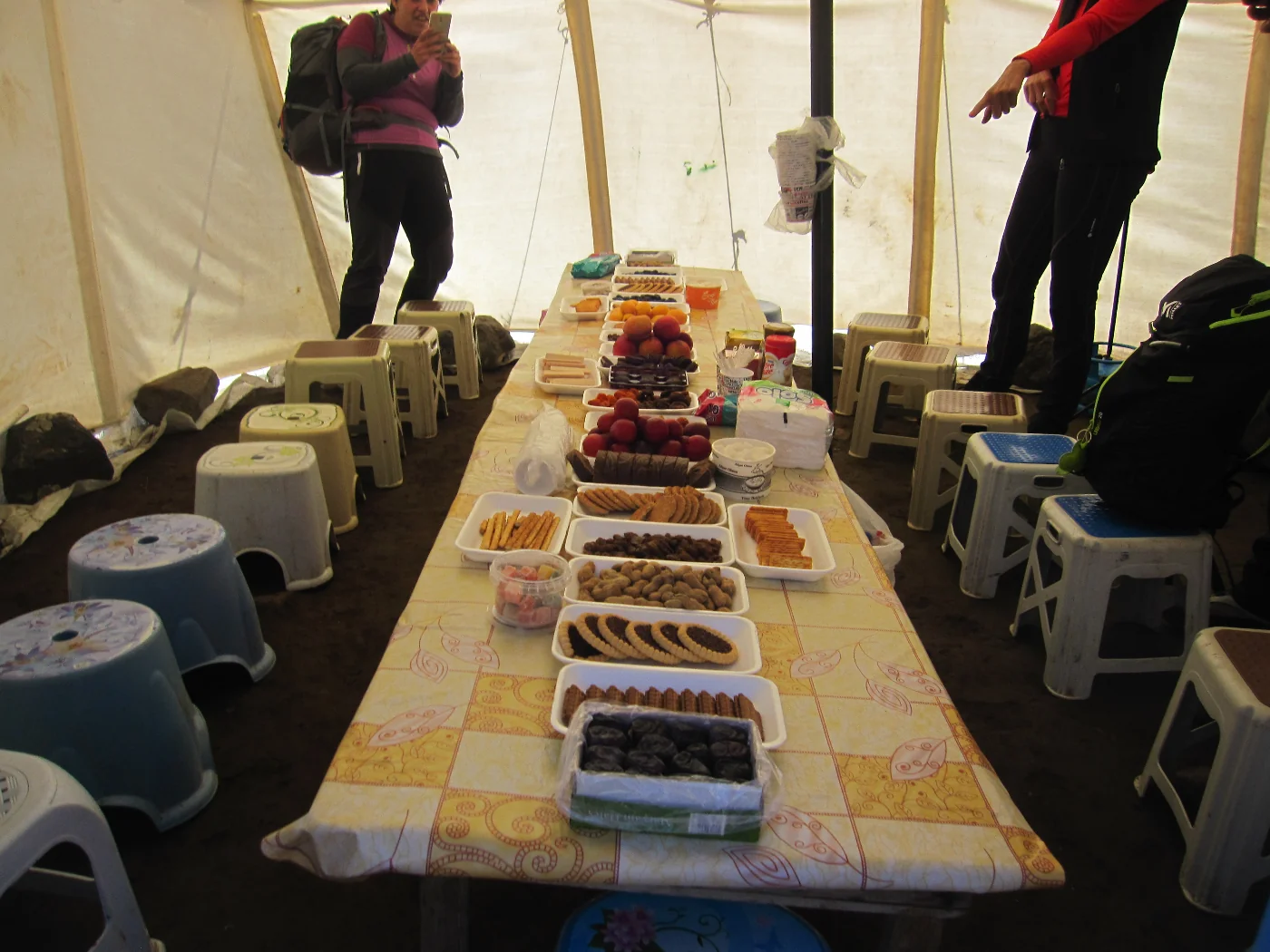
The ascent starts with the walk toward the first base camp at around 3,200 m. After five hours of walking, the reward comes in the form of tea, fruit, cheeses, and nuts.
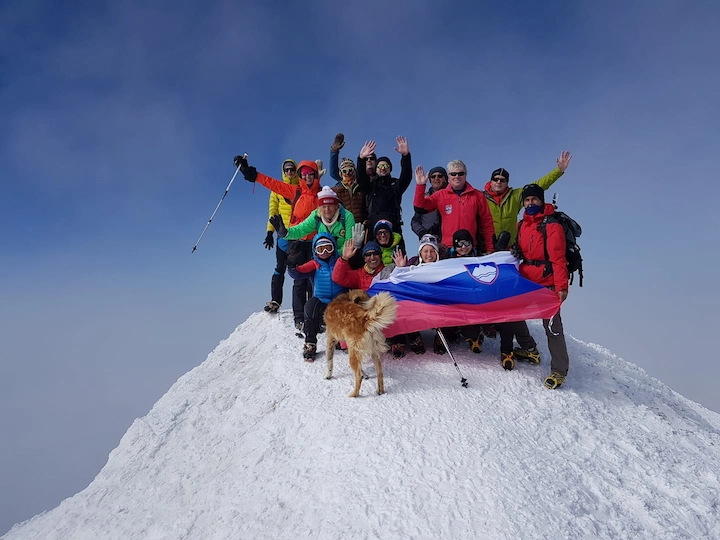
Then comes acclimatization toward 4,200 m, the move to the higher camp, and preparation for the night ascent. Around two in the morning, the final part begins. A little before eight, only the sky remains in front of you — above 5,137 m.
After the descent, the story rounds itself out nicely with Dogubeyazit, the Iranian market, Ishak Pasha Palace, Muradiye Waterfalls, and Lake Van.
Dogubeyazit
The starting point for Ararat, a rawer eastern rhythm, and the feeling of a town close to the border.
Ishak Pasha
A palace above the town that nicely complements the trek with a historical and architectural stop.
Lake Van
A large, partly saline lake of volcanic origin; a powerful introduction and ending to the eastern route.
For hikers
If you are interested in routes where effort, story, and writing matter, start with the books and guides.
If the trails are calling you
Ararat is a good reminder that hiking is not just elevation gain. It is also fear of the weather, laughter in camp, a heavy bag, a night that is too short, and the feeling that you come back different from the person who left. If you want to turn experiences like this into a journal entry, travel story, or book, take a look at the books and guides page. If you are especially drawn to routes like the Camino, below is a softer jump to the book.
Food
Turkish coffee
Strong, thick, slow. Coffee is not just a drink, but a short ritual.
Kebap and meat dishes
In the east, grilled meat appears very directly: bread, sauces, onion, tomato, cucumber, and different spices. Simple, filling, and very local.
Pide and lahmacun
A good choice for a quicker meal: dough, meat, vegetables, spices, and the feeling that Turkey knows how to turn bread into a main dish.
Meze, mantı, and gözleme
For a broader taste of the country, add meze plates, Turkish “dumplings” called mantı, or gözleme, thin stuffed flatbreads with cheese, potato, spinach, or meat.
Baklava, künefe, katmer
Desserts can be a meal of their own. Baklava is the classic, künefe brings warm cheesy sweetness, and katmer is an excellent pistachio bomb.
Şalgam and salep
Şalgam is a sour-salty fermented drink, often linked with turnip and a red-purple character of flavor. Salep is a thick, milky, almost pudding-like drink with orchid powder.
Road tip: local oils
On the road between Antalya, Konya, and Cappadocia, it is worth stopping in smaller shops with local products. In Konya, Gülvera is also mentioned, where among the oils you can find “kenevir yağı,” or hemp oil. Treat this as a culinary/cosmetic travel note, without health claims.
Drummer tip: Turkish cymbals
If you are a musician or drummer, Turkey is especially interesting because of its cymbal tradition. Istanbul and the Turkish tradition of cymbal making carry a lot of history, so I would recommend trying traditional Turkish cymbals and listening for the difference in warmth, darkness, and response.
Practical
Documents
For travel, plan on using a passport and check the current rules before departure, especially if you have transfers or are combining several countries.
- For Slovenian citizens: tourist visits are generally visa-free for up to 90 days within 180 days.
- Document: for Turkey, plan on a passport, not a national ID card.
- Validity: before departure, check your passport validity and the current entry rules.
- For non-EU travelers: check the visa, e-visa, permitted purpose of visit, and allowed length of stay.
- Transfers: when flying through Istanbul, leave enough time and always keep documents within reach.
Insurance
Do not treat Turkey like a regular EU trip. Arrange travel insurance with assistance and check before departure what it actually covers: cities, the coast, Cappadocia, a balloon flight, longer hikes, or Ararat.
- Cities and coast: classic travel insurance with assistance is highly recommended.
- Cappadocia: check activities such as balloon flights, horse riding, quads, valleys, and longer hikes.
- Ararat: make sure to check cover for trekking above 3,000 or 4,000 meters, rescue, acclimatization, and organized tours.
- Transport: add cover for delays, luggage, domestic flights, and route changes.
- Offline copies: save the policy number, assistance contact, documents, and tour organizer contact.
Getting around cities
In Istanbul, public transport is part of the experience. Metro, tram, ferries, buses, and Marmaray are usually more useful than a taxi, especially during rush hours. Istanbulkart is the most practical basis for getting around the city.
- Istanbulkart: useful for metro, tram, buses, ferries, and other forms of public transport.
- Airport: check the M11 metro, Havaist buses, or taxi depending on the time and location of your accommodation.
- Taxi: before the ride, check the approximate route, price, and whether the transport is official.
Moving between places
Do not plan Turkey like a small European country. Distances are large, so domestic flights save a lot of time. Buses remain very useful where flying does not make sense or is not an option.
- Domestic flights: most useful for Istanbul–Cappadocia, Istanbul–Van, or longer eastern connections.
- Buses: useful between cities, but distances are long.
- Car rental: makes sense for Cappadocia, the coast, and some regional loops, less so for Istanbul.
- East: around Van, Dogubeyazit, and Ararat, it is better to plan on organized logistics or a local driver.
Payments
Turkey uses the Turkish lira. Cards are widely usable in larger cities, hotels, and restaurants, but cash is still very practical for smaller places, the east, markets, tips, and local transport.
- Cards: useful in larger cities, hotels, restaurants, shops, and with many tours.
- Cash: keep it for smaller places, markets, tips, taxis, local transport, and the east of the country.
- Cappadocia: balloons, tours, and cave hotels can quickly raise the budget.
- Ararat: check what is included in the price: permits, guide, equipment, transfers, food, horses, and hotels.
When to go
The most universal choices are spring and autumn. Istanbul, Cappadocia, and the coast are usually more pleasant then than in the summer heat, and the east is easier to plan without extremes.
- Istanbul: most pleasant in spring and autumn; in summer, it can be hot and crowded.
- Cappadocia: spring and autumn are best for walking, valleys, and balloons; winter can be magical, but cold.
- Antalya: a longer season, very hot summers, and a more pleasant spring or autumn.
- Ararat: trekking tours are generally in summer, depending on snow, weather, and permits for entering the area.
What to pack
Luggage for Turkey depends on which part calls you. Istanbul and the coast are one story, Cappadocia is a world of its own, and Ararat already requires serious mountain gear.
- Istanbul: comfortable shoes, a clothing layer, a smaller bag, and some respectful clothing for religious sites.
- Religious sites: count on covered shoulders and knees, and removing shoes at mosques.
- Cappadocia: good footwear, sunglasses, a cap, water, and an extra layer for early mornings.
- Ararat: warm layers, wind protection, gloves, a hat, sun protection, and equipment according to the organizer’s instructions.
- East: choose practical clothing rather than excessive tourist flash.
Emergency numbers
Save emergency numbers before departure, together with the contact of your accommodation, insurance company, tour organizer, and copies of your documents.
- 112: the main emergency number in Turkey.
- Insurance company: save the assistance contact and policy number.
- Tour organizer: for a balloon flight, Cappadocia, or Ararat, keep their contact close at hand.
Gallery