Lithuania
Lithuania
Lithuania at a glance
Lithuania is a Baltic country in northeastern Europe. Together with Latvia and Estonia, it forms the trio of Baltic states — a region where history, forests, flat landscapes, the Baltic Sea, and a very strong sense of independence come together in a European experience that feels genuinely different.
- First impression: green, orderly, calm, and surprisingly friendly.
- Capital: Vilnius — a baroque old town, the Neris River, parks, and creative neighborhoods.
- Second city: Kaunas — architecture, student energy, and basketball as part of the city’s identity.
- For 3–4 days: Vilnius, Trakai, and Kaunas.
- For a longer trip: add Klaipėda, the Curonian Spit, the Hill of Crosses, or the national parks.
- The feeling in the country: people are very kind and warm, while the country’s history and today’s security situation also make a strong anti-Kremlin and anti-Russian-political mood very noticeable.

Lithuania travel guide
Lithuania is a good choice if you are looking for a trip that is not too far away, but still feels different from the usual Central European city break. The cities are compact enough for walking, public transport is useful, and the distances between the main stops are not overwhelming. The easiest first contact with the country is Vilnius, and from there the route naturally opens toward Trakai, Kaunas, or the coast.
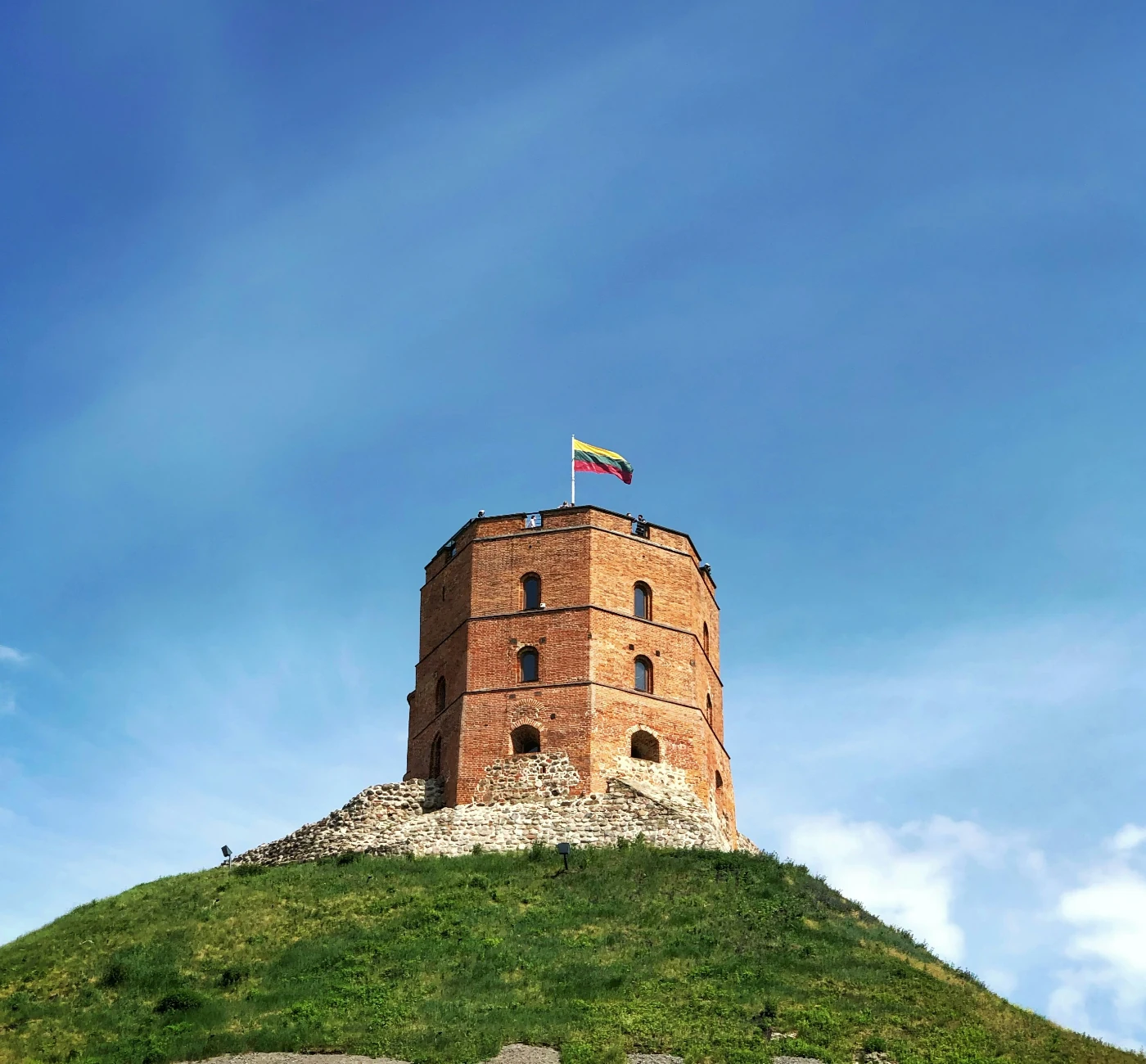
Vilnius is the best place to start: the old town, the cathedral, Gediminas Tower, Užupis, walks along the Neris River, and plenty of green spaces. The city moves at a calmer pace than larger European capitals, but it still has enough culture and student energy to never feel sleepy.
If you have more time, Trakai is a very logical day trip from Vilnius — an island castle, lakes, and a slower rhythm. Kaunas adds a different character: modernist architecture, street life, Laisvės alėja, and basketball, which here is not just a sports topic, but almost part of the city’s energy.
For a more varied Lithuania, it is worth looking toward Klaipėda and the Curonian Spit, where the Baltic coast, dunes, and pine forests turn into a completely different scene. Another frequently mentioned stop is the Hill of Crosses, a very special place of memory, faith, and national identity.
Cities and places
Vilnius
The best first contact with Lithuania: the old town, parks, the Neris River, Užupis, cafés, university energy, and the feeling of a city that knows how to be urban without becoming exhausting.
Trakai
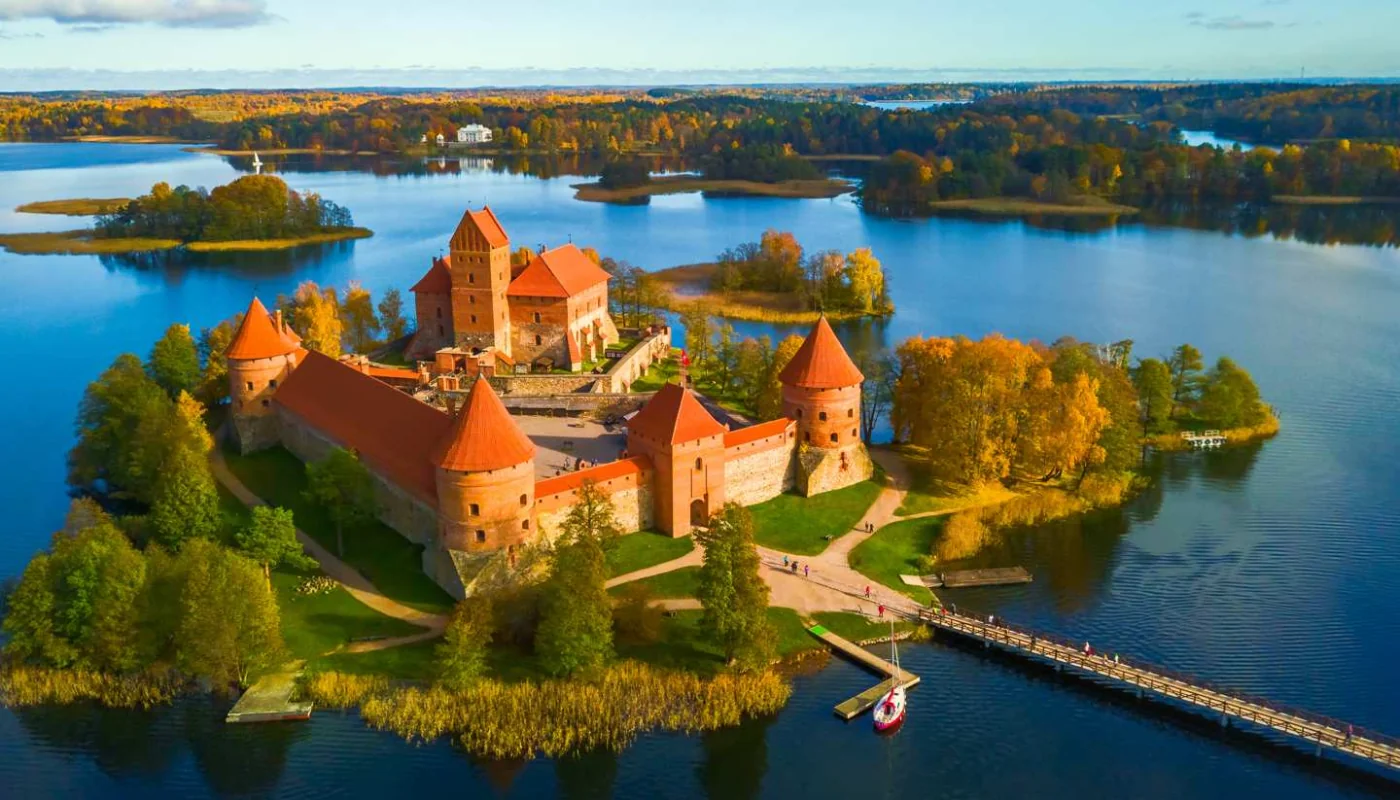
The island castle and lake landscape make this one of the most classic trips from Vilnius. It works well as a slower day between city sightseeing.
Curonian Spit
If you want to see Lithuania outside the cities, the coast with its pine forests and dunes is one of the most photogenic contrasts of the whole trip.
Kaunas
Kaunas has a different character from Vilnius: modernist architecture, Laisvės alėja, student energy, and Žalgiris as one of the strongest sports identities in the country.
Hill of Crosses
One of the most special places in Lithuania: a pilgrimage site, a symbol of persistence, and a place where personal faith blends with national memory.
Capital Vilnius
Vilnius is a historic old center with baroque facades, along with a calmer, greener side of the city by the Neris River, parks, and walking paths.

Neris and Užupis
The old town of Vilnius is ideal for slow exploring: the cathedral, narrow streets, courtyards, churches, views toward Gediminas Tower, and the feeling that history in the city does not appear as one single landmark, but as layer after layer.
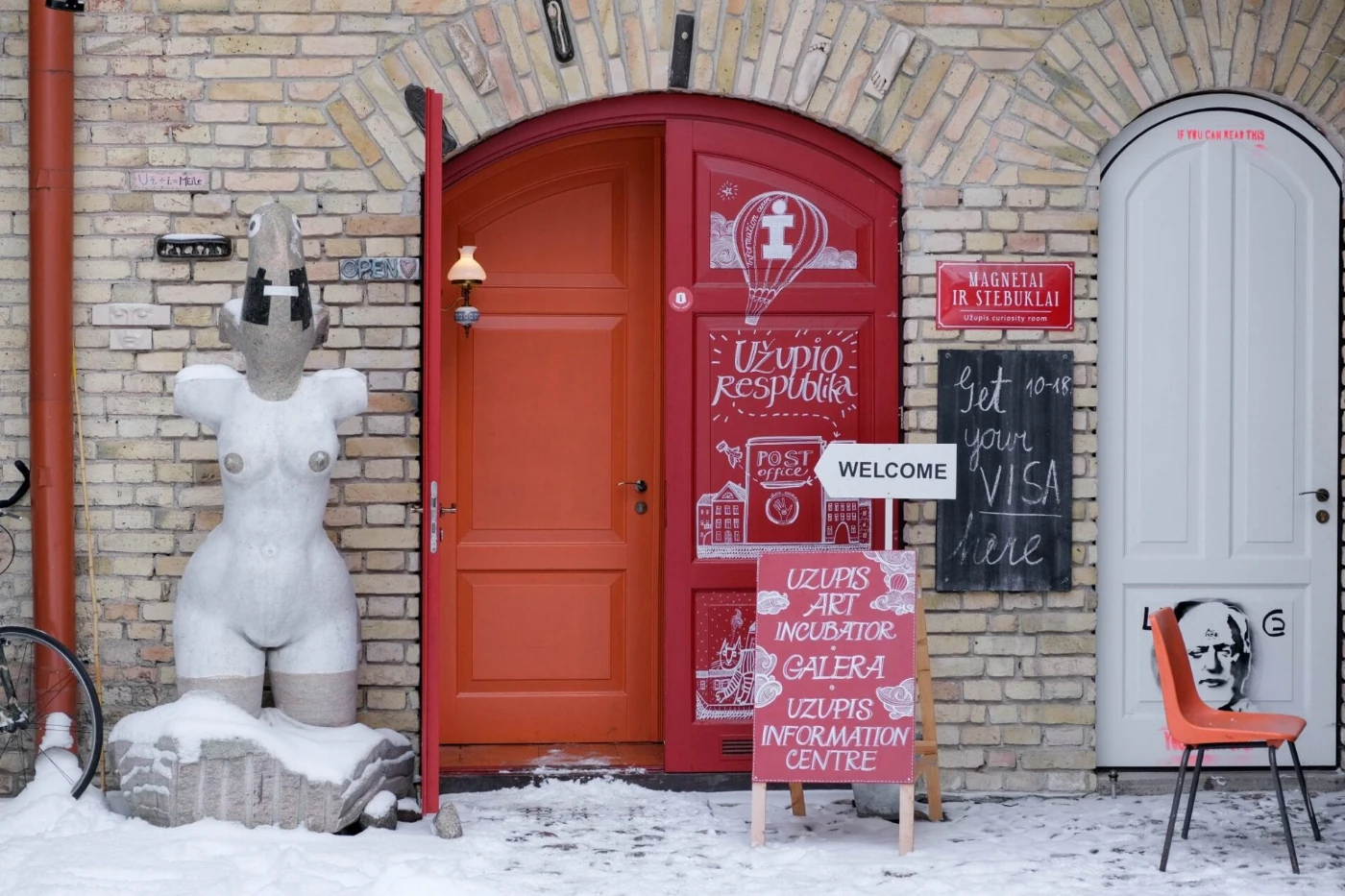
Užupis adds a more creative, bohemian character. It is a good contrast to the classic part of the city: less formal, more artistic, with small details, cafés, and corners where the city feels especially relaxed.
Another special part of Vilnius is its contact with the Neris River. Walks by the water, bridges, cycling connections, and green belts give the city the feeling that it was not built only for traffic, but also for walking, recreation, and everyday contact with nature.
Cathedral and Gediminas
The classic starting point in Vilnius: Cathedral Square, the tower, viewpoints, and a walk through the old urban fabric where the historic weight of the city is easy to feel.
Užupis
A bohemian district that brings lightness, street art, and a less formal rhythm into the city. It makes sense as a slower walk, not as a quick box to tick.
Green city
Vilnius has a lot of space for walking and recreation. That “green” feeling is a good bridge to my ATHENA experience and to thinking about a healthy urban environment.
ATHENA University
Sustainability Summer School in Vilnius
As part of the Sustainability Summer School program at Vilnius TECH, I worked in an international group where we researched noise pollution in Vilnius and developed proposals for a healthier urban environment.
We connected the largest part of the problem with traffic and the daily movement of people between home, offices, school, and services. In these areas, noise is not only a technical measurement, but something that affects well-being, concentration, and quality of life.
We proposed more green barriers, trees, vegetation belts, better use of public transport, and noise reduction at traffic-heavy intersections. For me, this was one of the more concrete examples of how sustainability does not begin with big words, but with very everyday questions: how loud the street is, how much shade the sidewalk has, and whether public transport is comfortable enough that people actually use it.
In this sense, it connects naturally with Cédrus Liget in Szeged. The connection is not geographical, but thematic. Both examples open the question of quality of life in the city. In Vilnius, the focus is noise, greenery, and mobility; in Cédrus Liget, it is an urban design with more greenery, mixed uses, park areas, and sustainable energy solutions.
Interesting detail
Vilnius on electric wires
Vilnius does not have a classic city tram today, but it does have a long public transport story. Historically, the horse tram, or konkė, was important, while today the city’s character is still strongly marked by trolleybuses — the kind of vehicle many people at home would simply call “trolleys.”
The first trolleybuses started running in Vilnius in 1956, and the connection between Antakalnis and the railway station became one of those city lines that speaks not only about transport, but also about the development of the city. Even today, trolleybuses are part of the everyday rhythm of Vilnius and a nice contrast to the old town.
For visitors, the main thing is that getting around Vilnius is fairly easy: buses and trolleybuses cover the main parts of the city, and tickets can also be bought with a contactless card or through apps such as m.Ticket and Trafi.
Kaunas
Kaunas is — like Lithuania as a whole — strongly connected with basketball.
Žalgiris Kaunas
Basketball in Lithuania is often called the “second religion.” In Kaunas, that line is not just a phrase, but something you feel very quickly — through Žalgiris, the color green, and a city that has lived with the club since 1944.
Žalgiris is not only a professional team. It is part of the city’s rhythm, pride, and identity. Going to a game at Žalgiris Arena is therefore not only a sporting event, but almost a cultural experience: loud fans, a sense of belonging, and the awareness that you are in a city where basketball truly means something.
Titles, European achievements, and the EuroLeague win in the 1998/99 season are an important part of the story. But what matters even more is what you do not see in the standings: the sense of belonging. In a country where basketball is part of national self-confidence, Žalgiris has a special place.
Laisvės alėja and the old center
The main walking axis, cafés, shops, and city rhythm. A good starting point for a first feel of Kaunas.
Modernist Kaunas
Kaunas is known for its modernist architecture from the interwar period, so it is worth reading the city through facades, staircases, and details too.
Kaunas Castle
One of the city’s most recognizable points, especially useful as a starting point for a walk around the old part of Kaunas and the confluence of the rivers.
Žaliakalnis and the funicular
The old city funiculars are a beautiful Kaunas detail, while Žaliakalnis adds a different view of the city and its everyday life.
Pažaislis
The monastery complex by the Kaunas Reservoir is a good choice when you want to step out of the city for a moment and into a calmer, architecturally powerful space.
Highlights
Lithuania reveals several different faces: archaeological sites, wooden sculptures in the forest, the Baltic Sea coast, pilgrimage places, lakes, and national parks.
Kernavė
Kernavė is one of the most important historic stops in Lithuania. It lies about 35 kilometers from Vilnius and is considered the country’s old medieval capital. Today, the place is interesting for its archaeological remains, hillforts, burial grounds, and viewpoints that reveal an older, almost primal layer of Lithuania.
Trakai
Trakai is the most classic trip from Vilnius: an island castle, lakes, wooden architecture, and a slower pace. It is a good choice when you want to add a more relaxed day with water, views, and a historic frame between city sights.
Curonian Spit and Juodkrantė
The Curonian Spit is the perfect contrast to the cities: pine forests, dunes, wind, and the feeling of the Baltic Sea. In Juodkrantė, the Hill of Witches is another interesting stop — a forest trail of wooden sculptures connected with Lithuanian folk stories, legends, and pagan motifs.
Hill of Crosses
The Hill of Crosses near Šiauliai is one of the most special places in Lithuania. A huge number of crosses and religious signs stand on the hill, and over time the place became a symbol of faith, persistence, and national identity. It has especially strong meaning because of the Soviet period, when the crosses were removed several times, and people kept putting them back.
Anykščiai and Aukštaitija
If you want to experience Lithuania in a greener way, Anykščiai and Aukštaitija are good choices. Anykščiai is known for its regional park, hiking and cycling trails, and the treetop walking path. Aukštaitija is Lithuania’s oldest national park, with lakes, rivers, forests, and old settlements.
Special museums and stops
For a deeper view, you can also add the Ninth Fort Museum in Kaunas, the Museum of Occupations and Freedom Fights in Vilnius, or the more unusual Devil’s Museum in Kaunas. These are not light sights, but they show Lithuania’s history, tensions, and identity in a strong way.
Route plan
Itineraries
3 days · Vilnius and Trakai
If you only have a long weekend for Lithuania, stay with Vilnius and Trakai. This is the most natural first taste of the country: the capital gives you the old town, the Neris River, Užupis and a green city rhythm, while Trakai adds lakes, the castle and a slower day outside the city.
- Day 1: Vilnius — the cathedral, Gediminas Tower, the old town and an evening walk along the Neris.
- Day 2: Užupis, museums, cafés, parks and the more creative side of the city.
- Day 3: Trakai as a day trip; the train from Vilnius takes around 34 minutes.
- Rhythm: one base, no rental car, enough time for walking.
4–5 days · Vilnius, Trakai and Kaunas
With four or five days, the route opens up very nicely toward Kaunas. This is a good choice if you want to feel two different city characters: Vilnius is more capital-like, green and baroque, while Kaunas feels more direct, student-driven, modernist and strongly tied to basketball.
Before you start chasing timetables and accommodation, it is worth checking the practical travel tips as well, because on a short trip the basics matter quickly: documents, costs, luggage and a realistic daily rhythm.
- Days 1–2: Vilnius — the old town, Užupis, the Neris, Gediminas and a slower evening.
- Day 3: Trakai — the island castle, lakes and a more relaxed pace.
- Days 4–5: Kaunas — Laisvės alėja, the old center, modernist architecture and Žalgiris energy.
- Transfer: Vilnius–Kaunas takes around one hour by the fastest trains, so a car is not necessary for this part.
7 days · Vilnius, Kaunas and the coast
One week is a very good frame for a first broader Lithuania trip. Start in Vilnius, add Trakai and Kaunas, then move toward Klaipėda and the Curonian Spit, where Lithuania becomes completely different: pine forests, dunes, wind, the Baltic Sea and a slower coastal feeling.
- Days 1–2: Vilnius — the old town, Užupis, the Neris and the main museums.
- Day 3: Trakai in the morning, then return to Vilnius or continue toward Kaunas.
- Day 4: Kaunas — Laisvės alėja, modernist details, the castle and city rhythm.
- Days 5–6: Klaipėda and the Curonian Spit — Smiltynė, Juodkrantė, Nida, dunes and pine forests.
- Day 7: return toward Vilnius, with an optional stop at the Hill of Crosses.
8–10 days · Lithuania with more depth
With eight to ten days, Lithuania starts opening up more beautifully beyond the main cities. A car becomes more useful here, because it makes it easier to connect the Curonian Spit, the Hill of Crosses, Anykščiai, Aukštaitija and smaller places where public transport is not always as practical.
- Possible rhythm: Vilnius → Trakai → Kaunas → Klaipėda → Curonian Spit → Hill of Crosses → Anykščiai / Aukštaitija → Vilnius.
- For the coast: give the Curonian Spit at least one night, because as a day trip from Vilnius it is too demanding logistically.
- For history: add Kernavė, the Ninth Fort Museum or the Museum of Occupations and Freedom Fights.
- For nature: Anykščiai and Aukštaitija are a good switch from the cities into greener Lithuania.
10–14 days · Lithuania as the start of the Baltics
If you want to connect Lithuania with Latvia or Estonia, treat it as the start of a Baltic route, not as a quick stop. Give Lithuania at least five to seven days, and only then continue naturally toward Riga or further toward Tallinn.
- Lithuanian part: Vilnius, Trakai, Kaunas, Klaipėda, the Curonian Spit and the Hill of Crosses.
- Continuation: from Šiauliai or Vilnius toward Riga, then onward through Latvia or Estonia.
- Train: Vilnius–Riga is possible as a direct connection, with a travel time of around 4 hours.
- Best feeling: do not rush through all three Baltic states; each part has a very different character.
3 rules for a good trip
Lithuania is at its best when you do not plan it too aggressively. Distances are not huge, but the trip can quickly stretch out if you try to squeeze Vilnius, Trakai, Kaunas and a long drive toward the coast into the same day.
For a broader pre-trip checklist — from documents and costs to insurance, payments and reservations — also check the practical travel tips.
- For 3–5 days, stay with Vilnius, Trakai and Kaunas.
- For 7 days, add the coast, but do not treat the Curonian Spit as a quick “photo stop”.
- For 8–10 days, take a car for the countryside, the coast, the Hill of Crosses and national parks.
- If you travel in summer, expect more people on the coast; if you travel in winter, expect shorter days and a slower rhythm.
Practical
Personal documents
For EU citizens, a valid national ID card or passport is generally enough to enter Lithuania. Since Lithuania is part of the Schengen Area, travel within the EU is usually straightforward.
- For EU citizens: a valid national ID card or passport.
- For children: every child needs their own travel document.
- For non-EU travelers: before booking, check visa rules, allowed length of stay and passport validity.
Vilnius Airport
Vilnius Airport is very close to the city, so arrival is not complicated. City buses run to the center, with lines 88 and 3G being especially useful for visitors. If you do not have much luggage, public transport is often practical enough.
- To the center: around 20 minutes by buses 88 or 3G.
- Frequency: 3G runs roughly every 10 minutes, while lines 1, 2 and 88 run roughly every 20–30 minutes.
- At night: line 88N connects the airport and the center roughly between 22:30 and 5:30.
- Ticket: a 60-minute ticket can also be bought with a contactless card on the validator inside the vehicle.
Travel by train
Lithuania does not have as dense a rail network as some larger European countries, but the main connections are very useful. The most practical routes are from Vilnius toward Kaunas, Trakai, Klaipėda and Šiauliai.
- Vilnius–Kaunas: the fastest connections take around 1 hour.
- Vilnius–Trakai: around 34 minutes, but the station in Trakai is not right by the castle, so allow time for a walk or local transport.
- Vilnius–Klaipėda: around 4 h 30 on the fastest connections.
- Vilnius–Riga: around 4 hours by direct train, useful if you are continuing a Baltic route.
- Practical: check the timetable directly with LTG Link, because works or seasonal changes can affect connections.
Train, bus or car
Between the main cities, you can do most of the route by train or bus. A car starts to make more sense when you want to connect the coast, the Curonian Spit, the Hill of Crosses, national parks or more scattered places.
- Without a car: Vilnius, Trakai, Kaunas and Klaipėda are doable by train or bus.
- With a car: it is easier to connect the Curonian Spit, the Hill of Crosses, Anykščiai, Aukštaitija and smaller stops.
- Buses: they fill the gaps well where the train is not the most practical option.
- Best compromise: public transport for cities, a car for 2–4 days of countryside or coast.
Public transport
Vilnius has buses, express buses and trolleybuses. For a first visit, the best combination is walking and public transport, especially if you stay near the old town or close to a good connection toward the center.
- 30 minutes: a standard ticket costs €1.00.
- 60 minutes: a standard ticket costs €1.25.
- 1 day: a day ticket costs €7.50.
- 3 days: a 72-hour ticket costs €13.50.
- Contactless: you can buy a 60-minute ticket on the validator; it activates automatically.
Klaipėda and the Curonian Spit
The Curonian Spit is one of the most beautiful parts of Lithuania, but it does require a little more logistics. From Klaipėda, you first take the ferry to Smiltynė, then continue toward Juodkrantė, Nida or other places on the spit.
- Old ferry: more useful for pedestrians and cyclists.
- New ferry: also useful for cars and buses.
- Car on the ferry: according to the Smiltynės perkėla price list, a return ticket for a passenger car is €23.20.
- Entry to Neringa: for a passenger car, the ecological fee is €50 between 20 June and 20 August, and €10 during the rest of the year.
- Recommendation: if you go to Nida, do not do it as a quick trip from Vilnius; it is better to sleep by the coast.
Driving, speeds and tolls
In Lithuania, traffic drives on the right. Roads between the main cities are useful, but on rural sections and in winter it is smart to expect a slower rhythm. If you rent a car, also check whether you are allowed to take it into Latvia, Estonia or onto a ferry.
- Built-up areas: usually 50 km/h.
- Outside built-up areas: often 70–90 km/h, depending on the road and signs.
- Expressway: often 110 km/h.
- Motorway: up to 130 km/h, often reduced to 110 km/h in winter.
- Lights: dipped headlights or daytime running lights are mandatory even during the day.
- Tolls: for regular passenger cars up to 3.5 t, classic motorway tolls are generally not the main issue; check e-vignettes for vans, freight vehicles and vehicles with more than 8 seats.
Seat belt and phone
When driving in Lithuania, it is good to know the basic rules that visitors often underestimate. Seat belts are mandatory for front and rear passengers, and using a phone without a hands-free system while driving is prohibited.
- Seat belt: mandatory for the driver and passengers in both front and rear seats.
- Children: the appropriate child seat or restraint system must be used.
- Phone: using a phone in your hand while driving is not allowed; use a hands-free system.
- As a guide: fines for not wearing a seat belt start at around €30, while fines for using a phone while driving start at around €60.
- Practical: with a rental car, a fine can also come with an administrative fee from the rental company.
Travel insurance
The European Health Insurance Card is a good base for a temporary stay in Lithuania, but it is not a replacement for travel insurance. It is useful with providers contracted with Lithuania’s territorial health insurance funds.
- EHIC: helps with emergency or necessary healthcare in the public system.
- In Lithuania: show your European Health Insurance Card and an identity document at the doctor.
- It does not cover: trip cancellation, lost luggage, private healthcare or transport back home.
- For an active trip: extra insurance makes sense, especially for cycling, hiking or driving through the countryside.
Payments, phone and electricity
Lithuania uses the euro, and card payments are widely accepted. Still, some cash is useful for smaller places, markets, parking or situations where a card terminal is not working.
- Currency: euro.
- Payments: card + a little cash is the safest combination.
- Phone: within the EU, roaming usually works like at home, but still check your data limits.
- Electricity: 230 V, 50 Hz; European plug types C and F are used.
- Practical: prepare an offline map of Vilnius and Lithuania before the trip for navigation and public transport.
Emergency numbers and basic safety
Lithuania is generally easy and safe for visitors, but save the emergency number before the trip. The European number 112 works for police, firefighters and emergency medical help.
- 112: single emergency number — police, firefighters and ambulance.
- In the city: normal care with documents, phone and wallet is enough.
- On the coast: Baltic weather can change quickly, so take a windbreaker even in summer.
- In nature: check distances, signal and last transport connections, especially outside the main cities.
Season
Lithuania has its most pleasant travel rhythm from late spring to early autumn. Summer is best for the coast and longer days, while spring and autumn are good for cities, museums, walks and fewer crowds.
- May–June: a good time for Vilnius, Kaunas, Trakai and green day trips.
- July–August: the best time for the Curonian Spit, Nida and the coast, but also the busiest.
- September: a very pleasant compromise for cities, the coast and fewer crowds.
- Winter: shorter days, colder weather and a different, quieter Baltic feeling.
Gallery