Dubai
Dubai
Dubai travel guide
Dubai is not just a city of records. It is a place of sharp contrasts: the historic Creek, traditional neighborhoods of Deira and Bur, futuristic Downtown, long waterfront promenades, artificial islands and a desert that begins much sooner than you expect.
First thing to understand about this Emirate is that it does not work like one compact city center. It is stretched out, the main sights can be far apart, and a good plan matters just like in many European cities. If you stay in Downtown, Burj Khalifa is the obvious first stop. If you stay around Dubai Marina or JBR, the rhythm feels more coastal. For the older part you need to head toward the Creek, Al Fahidi, Bur and Deira.
Dubai is also deeply international. People from all over the world live and work here, so English is useful almost everywhere, even though the official language of the UAE is Arabic. The currency is the UAE dirham (AED), cards are widely accepted, but it is still smart to carry a little cash for an abra ride, small purchases in the souks or tips.
The best way to visit usually combines three different rhythms: one day for futuristic Downtown, one day for the older part of the city around the Creek, and one coastal or desert day. If you have more time, add Global Village, Miracle Garden, Frame, Museum of the Future or a day trip to Abu Dhabi.
Nov–Mar
3–5 days
metro & taxi

Dubai at glance
Dubai stretches along the coast, and the easiest way to understand it is by areas. Around Dubai Creek you will find Deira and Bur Dubai, where the feeling of the old trading city is still strongest: souks, wooden abras and the historic core of the city. This is the best part if you want to see Dubai as a port, a trading hub and a cultural place, not only as a skyline of towers.
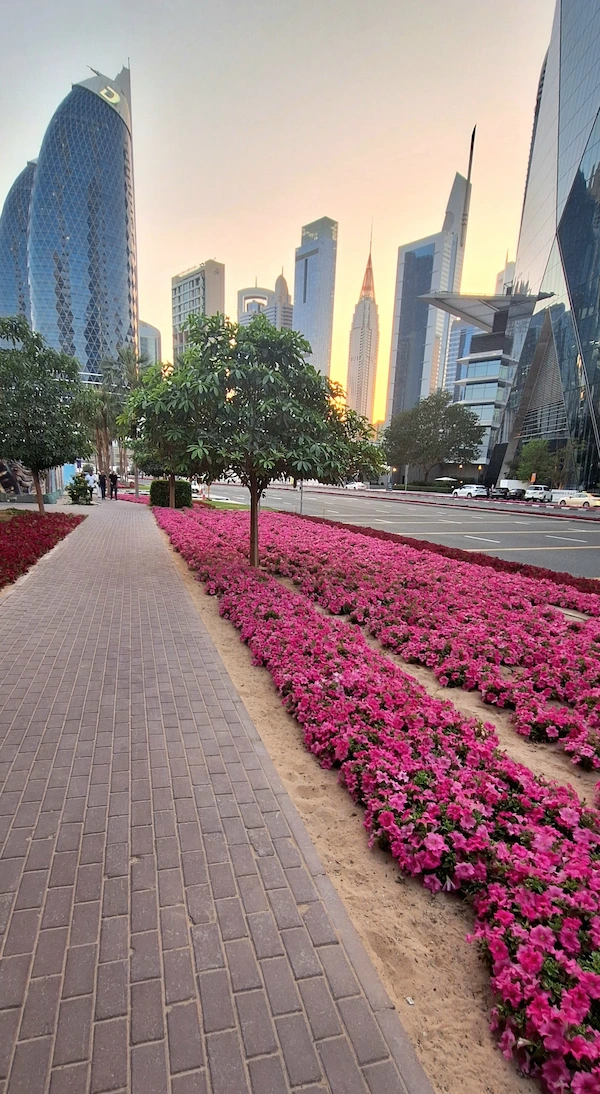
Further south and southwest, the modern face of the city takes over. Downtown Dubai is where you will find Burj Khalifa, Dubai Mall, Dubai Fountain and many of the most recognizable icons of contemporary Dubai. For a first visit, especially if you only have two or three days, this is the most logical place to start.
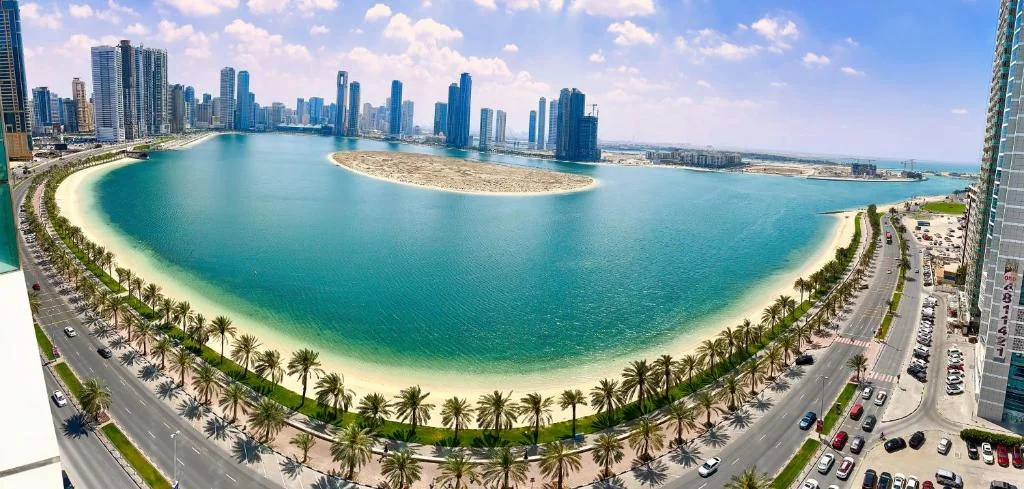
The coastal strip with Jumeirah, Kite Beach, Marina, JBR and Palm Jumeirah shows a more resort-like side of the city. Everything feels more relaxed here, especially in the evening with promenades and beaches. You quickly get a sense that the city was not just for ticking off major sights.
Dubai at a glance
When to go
The most pleasant time to visit Dubai is from November to March, when the weather is best for walking, beaches, desert trips and outdoor sightseeing. October and April can still work well, but daytime heat can already be quite strong.
- November–March: the best window for a first visit.
- April and October: still doable, but plan more shade and breaks.
- Summer: the heat is serious, so malls, museums, aquariums and evenings make more sense.
Getting around
City has a very useful metro system, especially along the Red Line between the airport, Downtown, Mall of the Emirates and Dubai Marina. For public transport, you will need a Nol card or ticket, which can be used for the metro, tram, buses and some other transport options.
My personal experience: the metro can get packed during the day, not only during the classic morning and afternoon rush hours. You notice it most at busy tourist stations such as Burj Khalifa/Dubai Mall, Mall of the Emirates, Union and BurJuman. If you travel with family, a taxi or Careem can sometimes be the better choice.
- Metro: best for longer, straightforward moves across the city.
- Taxi / Careem / Uber: better for the last few kilometers and evening transfers.
- Abra: the most atmospheric short ride across the Creek between Bur and Deira.
Dress code
Hotels, resorts, beaches and tourist zones can feel quite relaxed. Still, this is a city in the UAE, so moderate and respectful clothing is the smartest choice in public spaces.
- Malls and public areas: shoulders and knees should be at least reasonably covered.
- Beach and pool: swimwear is normal there, but not for walking around the city.
- Mosques and cultural places: dress more conservatively, with shoulders and legs covered.
How many days
Two days are enough for a first taste of Downtown, Burj Khalifa, Dubai Mall and at least a part of old town. For a better visit, I would plan three to five days, because distances are long, the heat slows you down, and many places feel best in the evening.
- 2 days: the main icons and Old Dubai.
- 3 days: Downtown, Creek, Marina or Palm.
- 4–5 days: add the desert, Miracle Garden, Global Village or Abu Dhabi.
Areas of Dubai
Old Dubai, Creek, Deira and Bur Dubai
This is the best part of the city beyond the glossy postcards. Al Fahidi Historical Neighbourhood, Dubai Creek, abra boats, Gold Souk, Spice Souk and the streets of Deira show a more commercial, historic and everyday side.
The best way to do it is simple: start in Al Fahidi, walk toward the Creek, cross the water by abra and continue into the souks of Deira. This part of is not as polished as Downtown, which makes it feel more alive, and to me, even more authentic.
Downtown Dubai
Downtown is your first encounter with the big “brothers” Burj Khalifa, Dubai Mall, Fountain, views, huge indoor spaces and the evening city-light atmosphere. If you have limited time, this is the most logical base for your first day.
Just keep in mind that the area is very touristy and often crowded. You can reach Burj Khalifa and Dubai Mall by metro, but the walk from the station to the actual center is long, and during busy times the crowds can be tiring.
Dubai Marina and JBR
Marina and JBR are more evening-oriented, coastal and walkable. Here you get tall towers, the marina, restaurants, the beach, promenades and a more relaxed feeling than in Downtown. If you like a mix of sea, city and evening energy, this is one of the nicer areas to stay in.
The best time to come is late afternoon, when the heat starts to drop. A walk around the Marina, dinner by the water or a stop at JBR Beach is already enough of a plan without adding too much.
Palm Jumeirah
Palm Jumeirah is one of city’s most recognizable images, but on the ground it is more spread out than it looks in aerial photos. The View at The Palm is one of the most useful ways to understand the shape of the island, and you can combine it with a waterfront walk, Atlantis or Aquaventure if you are traveling with family.
If you only have a short stay, Palm does not have to be your first priority. But if you want to understand the scale of huge projects, artificial islands and resort-style luxury, it is worth adding on day three or four.
Jumeirah, Kite Beach and Burj Al Arab views
Jumeirah is a more relaxed coastal part of the city. Kite Beach is a good choice for a walk, coffee, a quick bite or a little time by the sea. Here city feels less like a shopping mall and more like a sunny beach destination.
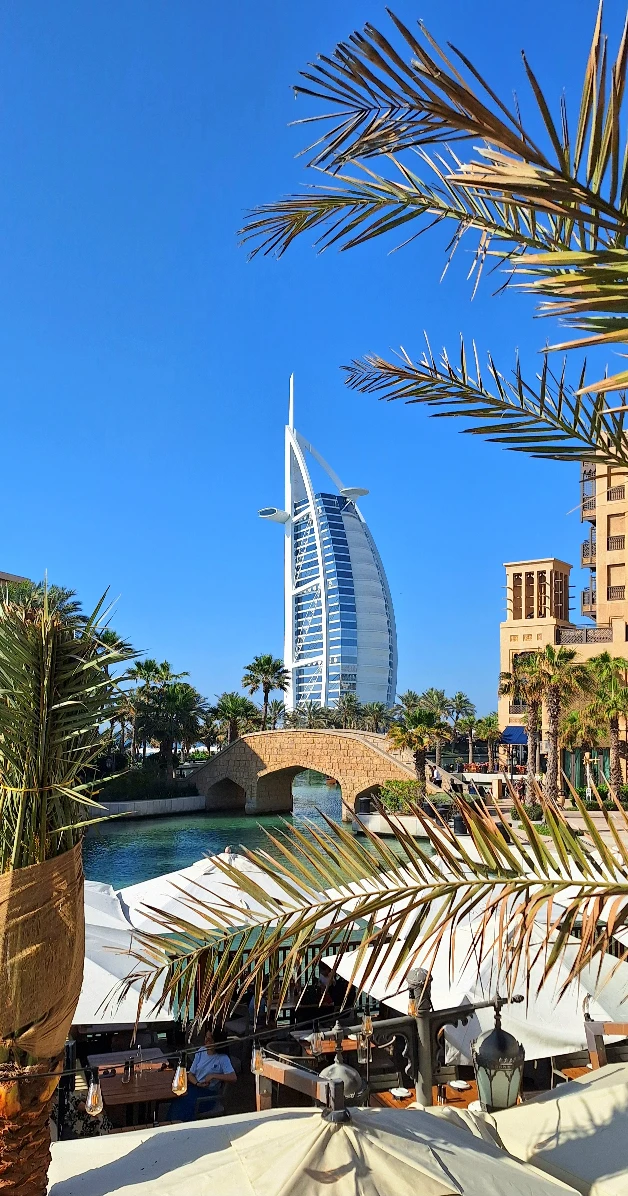
If you want a good view of Burj Al Arab, combine Jumeirah with Umm Suqeim Beach or Madinat Jumeirah. This is not the part of town where you tick off dozens of sights, but it is great for getting a feel for the space, light and slower side of Dubai.
Alserkal Avenue and contemporary Dubai
If you want something less obvious, Alserkal Avenue is an interesting contrast. It is an arts and creative district with galleries, events, cafés and a more urban scene that is not only about luxury hotels and major attractions.
It is not essential for a first visit, but it is a good stop if you have several days and want to see something closer to the city’s contemporary cultural scene than the classic tourist route.
Top experiences
Burj Khalifa
The tallest building in the world is city’s most obvious symbol and almost a must on a first visit. The basic “At the Top” experience takes you to levels 124 and 125, while higher and more expensive options include more exclusive observation levels.
The best time is just before sunset, but that is also when prices and crowds are usually higher. If the view matters more to you than the perfect golden-hour photo, pick an earlier slot or go in the morning. In the evening, you can continue around Fountain and Burj Lake.
- Plan for: around 1.5–2 hours with security, elevators and the viewpoint.
- Best: book in advance, especially for evening slots.
- Tip: do not schedule something tight immediately afterward, because moving through this area can be slow.
Desert safari
A desert safari is one of the strongest contrasts to the city. After a day of glass, concrete and air-conditioned spaces, the desert makes Dubai feel very far away. A classic program includes dune driving, photo stops, dinner and an evening show in a camp.
When choosing a tour, look at the group size, vehicle type, how much time you actually spend in the desert and whether you want a very touristy or a calmer experience. Prices vary a lot, and the cheapest option is not always the best one.
- For a first visit: an evening safari is the most practical choice.
- For photos: choose a sunset-oriented time slot.
- For a quieter experience: pick a small group or private tour.
Global Village
Global Village is a large seasonal entertainment and cultural complex where food, shopping, shows and country pavilions all come together. It is not a quiet cultural experience, but more like an evening fair on a Dubai scale.
It works best at night, when the lights come on and the heat drops. If you enjoy food stalls, performances and a slightly chaotic evening buzz, this can be one of the most fun parts of the city. If you want peace and quiet, you can skip it.
- Best time: evening.
- Good for: families, couples, groups and food lovers.
- Tip: check the season and opening days before you go.
Dubai Miracle Garden
Miracle Garden is a colorful seasonal garden with huge flower installations. It is photogenic, a little surreal and completely in Dubai style: out of the desert comes a giant floral spectacle.
Visit in the cooler part of the day, either early morning or toward the evening. During the day the light can be harsh and the heat tiring. If you are traveling with kids or want a lighter program, it combines well with Global Village because the two are relatively close.
- Plan for: around 1.5–2 hours.
- Best: morning or late afternoon.
- Tip: check tickets and opening times seasonally.
Jumeirah and Kite Beach
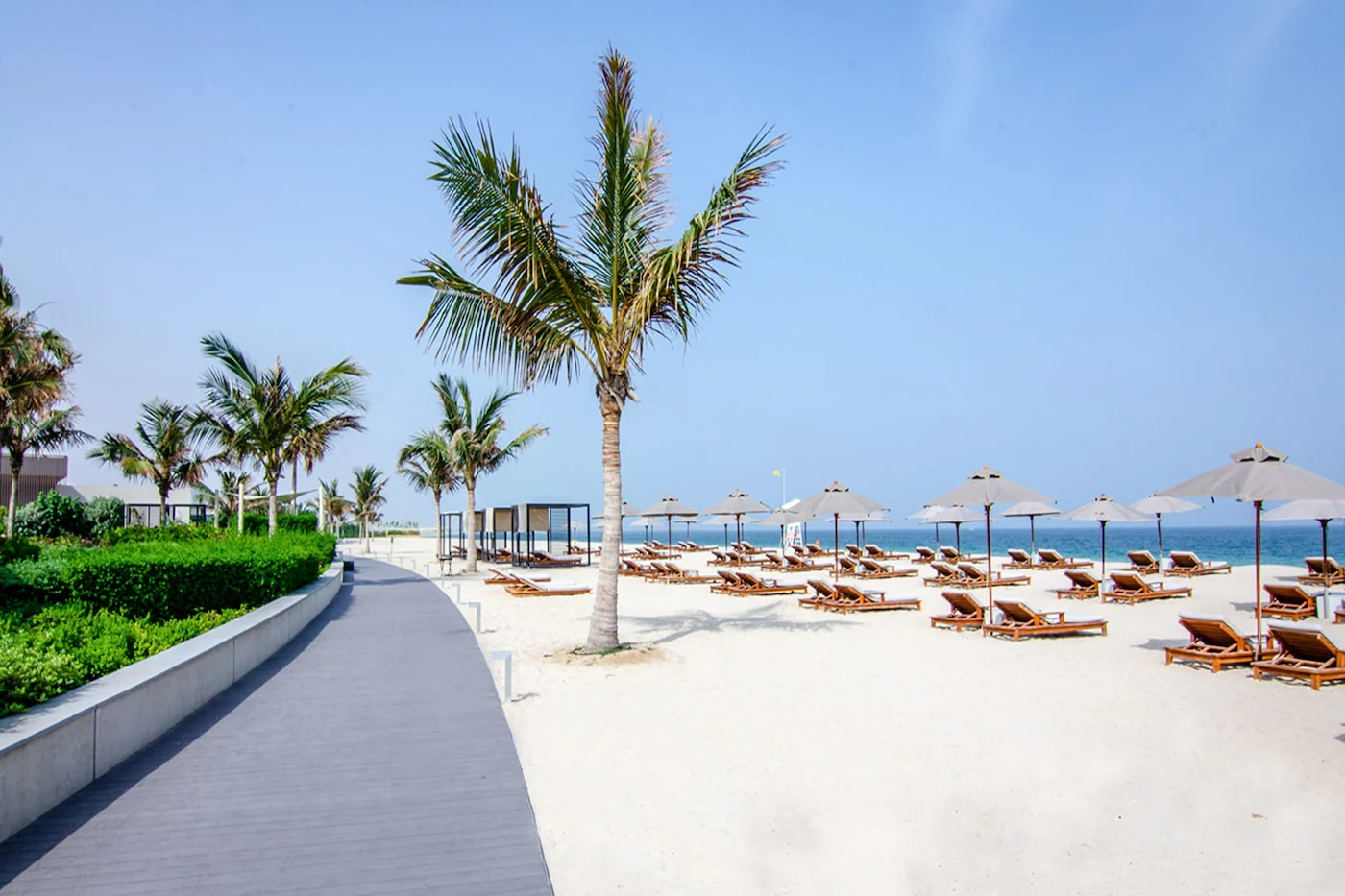
Jumeirah and Kite Beach are good choices when you want to slow down for a few hours. White sand, walking paths, views back toward the city and a more relaxed coastal rhythm are exactly what you need after Downtown or several big attractions.
Kite Beach is useful for a walk, coffee, a quick meal or people-watching. If you want a nice view of Burj Al Arab, add Umm Suqeim Beach or Madinat Jumeirah.
Palm Jumeirah
Palm Jumeirah is one of those places that makes the most sense from above. On the ground it is spread out and quite hotel-heavy, so The View at The Palm is one of the best ways to get the full picture of the artificial island.
If you have more time, add Atlantis, Aquaventure or an evening walk by the water. If your Dubai stay is short, combine Palm with Dubai Marina or JBR so one transfer gives you more.
Dubai Frame
Dubai Frame is one of the most useful attractions if you want to understand the contrast between old and new Dubai. On one side you look toward the older parts of the city, and on the other toward the modern skyline.
It connects very well with a morning in Old Dubai or a visit to Zabeel Park. It is not as iconic as Burj Khalifa, but for understanding the city it can be even more helpful.
- Plan for: around 1 hour.
- Good for: first visits, photos and the old/new contrast.
- Tip: combine it with Old Dubai, not Marina.
Museum of the Future
Museum of the Future is one of the most recognizable modern buildings in Dubai. The exterior alone is worth a stop, while the interior is more of an experience than a classic museum. Expect futuristic scenes, interactive spaces and ideas about technology, space, health and what comes next.
Tickets are often tied to time slots, so this is not something I would leave until the last minute. If you are not sure whether to go inside, still stop by outside — the architecture is strong enough to deserve a visit on its own.
Al Fahidi, souks and Dubai Creek
Al Fahidi Historical Neighbourhood, the souks of Deira and an abra ride across Dubai Creek are among the most valuable Dubai experiences. Not because they are the most spectacular, but because they give the city a layer of history and everyday life.
I would recommend this part to almost anyone who does not come to Dubai only for views and hotels. Explore it on foot and do not pack the schedule too tightly. Get a little lost in the lanes, look at spices, gold and textiles, drink something cold along the way and notice how different Dubai feels by the Creek.
Madinat Jumeirah and Burj Al Arab
Madinat Jumeirah is a good choice for a polished, evening-friendly and visually strong version of Dubai. Canals, restaurants, Arab-inspired architecture and views toward Burj Al Arab make the area very photogenic.
It is not the most authentic part of the city, but it is pleasant for an evening, dinner or a walk. If you want a beautiful view of Burj Al Arab without building a whole program around it, this is one of the better options.
Itinerary
Dubai works best when you do not plan it too much like a European city. Distances are long, the weather can change your pace quickly, the metro is useful but often crowded, and a taxi is sometimes simply the most practical solution. That is why it makes more sense to build each day around one area and add no more than one major attraction.
The itinerary below is designed for a first visit and a realistic rhythm: one main direction in the morning, a break or transfer in the afternoon, and then an area that comes alive in the evening.
Downtown, Burj Khalifa and Dubai Mall
Start with the most recognizable part of the city. Spend the morning or early afternoon around Dubai Mall and the surrounding area, then go up Burj Khalifa. End the evening by Dubai Fountain and with a walk around Burj Lake. It is the most touristy day, but for a first contact with Dubai it makes perfect sense.
Old Dubai, Creek, souks and Dubai Frame
Let the second day be the contrast to the first. Start in Al Fahidi Historical Neighbourhood, walk to the Creek, cross toward Deira by abra and continue through Gold Souk and Spice Souk. In the afternoon or toward the evening, add Dubai Frame because it ties the view of old and new Dubai together beautifully.
Marina, JBR, Palm Jumeirah and Jumeirah
Make the third day more coastal. Start slower, then move toward Palm Jumeirah or The View at The Palm, continue to Dubai Marina and JBR, and finish the evening with a walk by the water or dinner in the Marina. If you want a view of Burj Al Arab, add Madinat Jumeirah.
Miracle Garden, Global Village or the desert
Choose the fourth day based on season and energy. If Miracle Garden is open, you can combine it with Global Village. If you want a stronger contrast to the city, choose a desert safari and keep the day slower, because most evening programs usually pick you up from the city already in the afternoon.
The most sensible short version
Day one: Downtown, Burj Khalifa, Dubai Mall and the fountains. Day two: Old Dubai with Al Fahidi, the Creek, an abra ride and the souks, then Marina or JBR in the evening. It is not everything, but it is the best compromise between iconic Dubai and a more grounded side of the city.
Add Abu Dhabi or slow the pace down
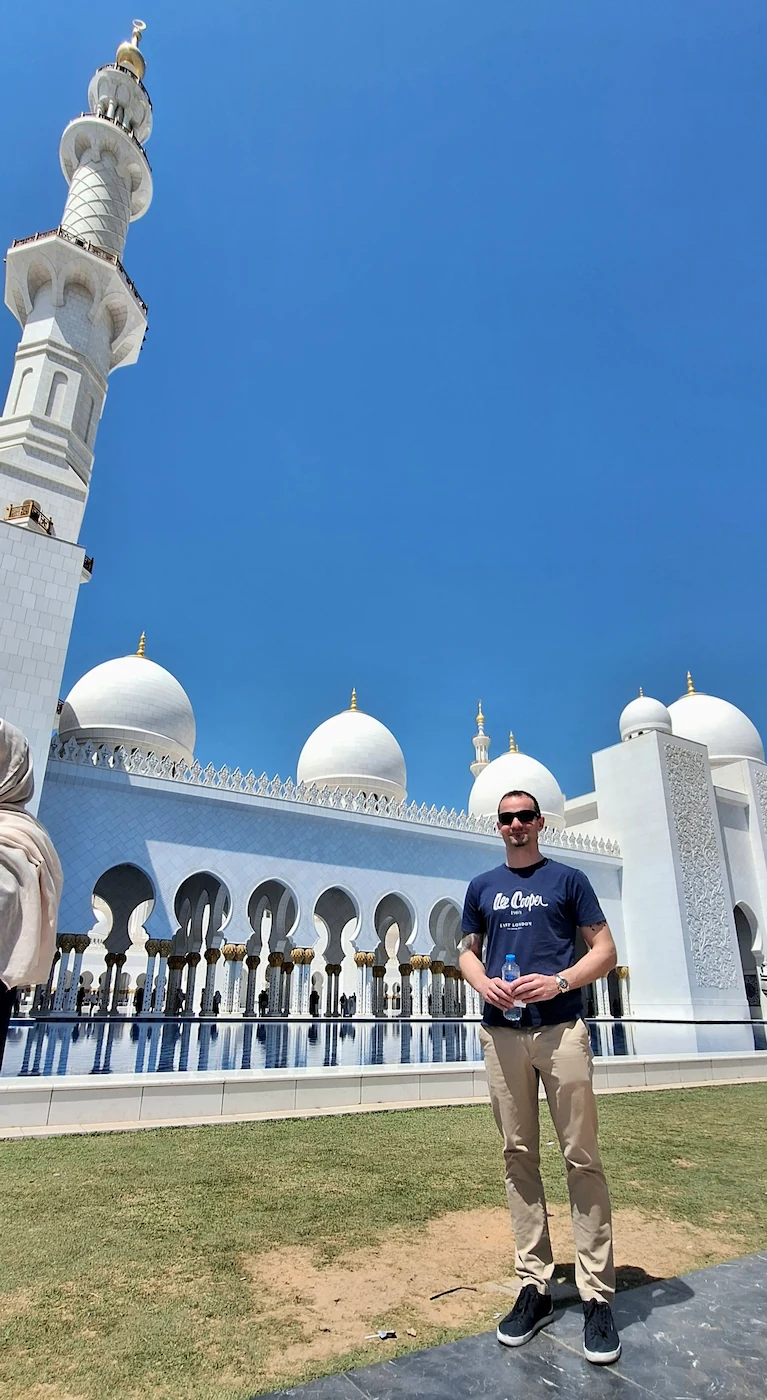
A fifth day is ideal for a day trip to Abu Dhabi, especially for Sheikh Zayed Grand Mosque, Louvre Abu Dhabi and Qasr Al Watan. If you prefer to stay in Dubai, add Museum of the Future, Alserkal Avenue, a slower beach day or more time around Jumeirah and the Marina.
Practical before you go
Airport and arrival in the city
Dubai International Airport is very well connected to the city, especially if you arrive at a terminal with direct metro access. The metro is the cheapest option, while a taxi is the easiest, especially if you arrive late, have a lot of luggage or stay far from a metro station.
- Cheapest: metro + Nol card.
- Most comfortable: official taxi, Careem or Uber.
- Most practical: taxi, if your hotel is not close to a metro station.
Payments and money
The currency is the UAE dirham (AED). Cards are widely accepted in Dubai, including most restaurants, hotels, shops and attractions. Cash is still useful for souks, small purchases, abra rides and tips.
- Card: enough for most expenses.
- Cash: carry a small amount for Old Dubai and the souks.
- Tipping: not always required, but common for services.
Tickets and reservations
For the most popular attractions, it is smart to book in advance, especially Burj Khalifa, Museum of the Future, The View at The Palm, Global Village in peak season and desert safaris. Prices change depending on time slot, season and ticket type.
- Book ahead: Burj Khalifa at sunset, Museum of the Future.
- Recommended: The View at The Palm, desert safari.
- Check seasonally: Global Village and Miracle Garden.
Heat and sightseeing pace
Dubai is not a city where walking all day is always a good idea. Even in the good season, the sun can be strong and distances are large. In summer, you need to move even more of your plan indoors and into the evening.
- Morning: Old Dubai, beach, walks.
- Midday: mall, museum, break, air-conditioning.
- Evening: Downtown, Marina, Global Village, desert.
Ramadan and local customs
If you travel during Ramadan, check the current rules and opening hours. Dubai remains very accessible for visitors, but the rhythm of the city can change: some restaurants operate differently, while evenings are often more lively after iftar.
In any case, it is good to be respectful of the local environment. That means dressing moderately in public, behaving calmly in cultural and religious spaces, and using good judgment when photographing people.
What to skip if you are short on time
If you only have two or three days, do not try to see everything. Dubai becomes tiring quickly if you keep jumping from one side of the city to the other. Choose fewer things and experience them more calmly.
- Skip: far-away attractions if they are not seasonally open or do not really interest you.
- Do not repeat too much: you do not need every viewpoint; choose one or two.
- Do not squeeze in: Miracle Garden, Global Village, Palm and Marina all in one day.
Who Dubai is for
For a first visit to the UAE
Dubai is the easiest entry point into the United Arab Emirates because logistics are simple, English works almost everywhere, and the choice of hotels and transport is very wide.
For architecture and views
If you are interested in tall buildings, futuristic projects, artificial islands, observation decks and the feeling of a city that is constantly building something new, Dubai is one of the strongest destinations.
For families
Dubai is very practical for families: there are many indoor attractions, theme parks, beaches, aquariums, well-organized hotels and easy taxi transfers.
For a winter city break
When Europe is in winter mode, Dubai is a good choice for sun, walks, beaches and an urban escape. It works best between November and March.
My post: Dubai
Excerpt
Dubai is a city of contrasts: between desert and skyscrapers, between views from Burj Khalifa, evening safaris, flower gardens and artificial islands that have become some of the city’s most recognizable images.
But what I find most interesting about Dubai is that you cannot reduce it to one single image. One moment you are in the air-conditioned world of Dubai Mall, the next you are by the Creek, crossing the water by abra and feeling much more grounded among the souks. That difference between the shiny and the everyday is exactly what makes the city more interesting than it may seem at first.
If you are visiting Dubai for the first time, leave room for both sides of the city. Burj Khalifa, Marina and Palm are the spectacle, but Old Dubai, the Creek, the souks and the desert are the parts that give the trip more of a story.